Categories
Tags
-
#uk
#Small Business
#Sublimation Transfer Printing suppliers
#how to
#Ceramic Mugs
##Custom printing
#t-shirt printing
##Printing
#DOORMAT
#diy
#Dye Sublimation Paper
#Custom T-Shirts
#sublimation
#UK sellers
##leather
#Heat Transfer Vinyls
##SmallBusiness
##PolymerProduction
#heat press
#Mugs and Cups
#vinyl
#Heat Transfer
#clam heat press
#heat press 15x15
#EtsySeller
#sublimation blanks
#hustle
#Heat Press Machine
#Sublimation Printing
#Automatic
#How to remove HTV
#print tips
#cutter plotter
#HTV
Archives
Why Your HTV Cutter Plotter Struggles With Small Designs
-
Posted by Edi Jiang Filed in Business #Heat Transfer #Sublimation Printing #cutter plotter #HTV 27 views
Not long ago, producing heat transfer vinyl graphics was relatively straightforward.
Most custom apparel businesses were creating bold text, simple logos, sports numbers, and basic designs that were easy to cut, weed, and press. As long as a cutter plotter could follow a vector path reasonably well, the job got done.
Today, the situation looks very different.
Scroll through Etsy, Instagram, TikTok, or any online marketplace selling personalised apparel, and you'll quickly notice a trend. Designs are becoming increasingly detailed. Customers are requesting fine script fonts, minimalist branding, tiny sleeve graphics, oversized back prints with intricate linework, and layered artwork that demands a much higher level of precision.
As expectations rise, many businesses discover that successful HTV production is no longer simply about owning a vinyl cutter. It is about owning a cutter plotter that can consistently deliver clean, repeatable results under real production conditions.
That distinction becomes incredibly important once orders start increasing.
The Growing Gap Between Hobby Cutting and Professional Production
Many people enter the HTV business with a basic machine.
There is nothing wrong with that.
In fact, countless successful apparel businesses started on a spare desk with a modest cutter and a heat press.
The challenge appears later.
A machine that performs adequately for occasional weekend projects may begin struggling when faced with daily production work.
At first, the warning signs seem minor.
A few letters don't weed properly.
Corners look slightly rounded.
Certain materials become difficult to cut cleanly.
Long graphics start drifting off track.
Then the wasted vinyl begins to add up.
Many operators initially assume the material is defective. Others blame the software. Some spend hours adjusting pressure settings.
In reality, production quality usually depends on several factors working together rather than a single setting or component.
Understanding those factors can save significant time, material, and frustration.
Why Modern HTV Designs Are More Demanding
One of the biggest changes in the industry is design complexity.
A decade ago, large block lettering dominated custom garment decoration.
Today's customers often prefer something entirely different.
Luxury-style branding fonts.
Handwritten script text.
Fine-line illustrations.
Small chest logos.
Intricate monograms.
Minimalist artwork with tiny details.
These designs look fantastic on a computer screen.
Unfortunately, vinyl is still a physical material.
It stretches slightly. It shifts slightly. It reacts to blade pressure. It responds differently depending on temperature, storage conditions, and even the material itself.
When cutting larger graphics, those small variables may go unnoticed.
When cutting tiny text or detailed artwork, every small imperfection becomes visible.
This is why many users report a common experience.
Their machine cuts large graphics perfectly but struggles with small lettering.
That is usually not a coincidence.
Small designs reveal weaknesses that larger graphics can hide.
The Real Importance of Tracking Accuracy
When people compare cutter plotters, they often focus on speed.
Speed is certainly useful.
However, tracking accuracy is often far more important in day-to-day production.
Imagine cutting a small logo that measures only ten centimetres wide.
Almost any machine can manage that.
Now imagine cutting multiple designs across several metres of HTV material.
Even a tiny amount of tracking drift becomes a serious problem.
Rows stop lining up correctly.
Graphics shift position.
Material waste increases.
Production slows down because operators constantly need to monitor the machine.
Professional users understand that reliable tracking can be worth far more than maximum cutting speed.
A machine that tracks accurately hour after hour creates a smoother workflow and reduces costly mistakes.
Small Text Is Where Most Problems Begin
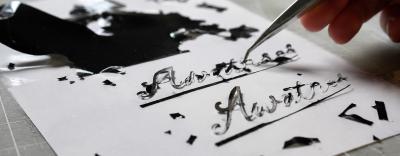
If there is one area that exposes weaknesses in a cutter plotter, it is small text.
Particularly fonts with thin strokes, sharp corners, and tight spacing.
On-screen artwork often creates unrealistic expectations.
Designs can look crisp and perfect inside Illustrator or CorelDRAW.
Then they reach the cutter.
Suddenly, certain sections fail to separate correctly.
Inner shapes remain partially connected.
Corners don't close properly.
Letters lift during weeding.
Thin strokes tear apart.
At that point, the actual cutting process may only have taken a few minutes.
The real frustration begins during weeding.
What should be a quick production step turns into a slow and delicate process that consumes valuable time.
For businesses handling customer orders, inefficient weeding can become one of the largest hidden production costs.
Blade Setup Is More Important Than Most People Realise
One of the most common mistakes among newer HTV users involves blade exposure.
Many operators assume more blade exposure equals better cutting performance.
The opposite is often true.
When too much blade extends from the holder, the blade begins dragging through the material rather than slicing cleanly.
This can create several problems:
Poor corner quality.
Distorted shapes.
Lifted details.
Inconsistent cutting depth.
Difficulty weeding.
For HTV applications, blade exposure should be surprisingly minimal.
The blade only needs enough exposure to cut the vinyl layer itself.
Excessive blade depth often causes more problems than insufficient depth.
Experienced operators frequently solve cutting issues with a simple blade adjustment rather than major software changes.
Cutting Faster Is Not Always Better
Speed can be deceptive.
A fast cutter looks impressive.
Watching a machine race across material creates the impression of efficiency.
However, detailed HTV work requires control more than raw speed.
Every time the blade changes direction, it must rotate and reposition accurately.
When cutting detailed graphics at excessive speeds, the blade may struggle to keep up with rapid directional changes.
The result can include:
Rounded corners.
Distorted curves.
Incomplete cuts.
Loss of fine detail.
Many professionals deliberately reduce cutting speed when working with intricate designs.
The slight increase in cutting time is usually offset by faster weeding and fewer production errors.
In other words, slowing down often speeds up the entire workflow.
The Hidden Cost of Worn Blades
Blade wear is often underestimated.
Unlike a broken component, a worn blade usually continues functioning.
It simply performs less accurately.
Because deterioration happens gradually, many users fail to recognise the issue immediately.
Instead, they begin adjusting force settings, speed settings, and artwork parameters while the real problem remains unchanged.
A dull blade creates rougher cuts and inconsistent edges.
This becomes particularly noticeable when working with speciality materials such as glitter HTV, flock HTV, and reflective vinyl.
Replacing a blade may seem like a small maintenance task, but it can dramatically improve cutting performance.
Sometimes the simplest solution is the correct one.
Why Artwork Preparation Matters Just As Much As Equipment
Even the best cutter plotter cannot compensate for poor artwork.
This is a lesson many apparel decorators learn through experience.
Designers often create artwork without considering how it will be physically produced.
Ultra-thin fonts.
Microscopic details.
Unnecessary anchor points.
Overly complex paths.
These elements may look attractive digitally but create unnecessary challenges during production.
Successful HTV operators frequently modify artwork before cutting.
A slight increase in line thickness.
A simplified curve.
The removal of unnecessary details.
These small adjustments can transform a frustrating design into one that cuts and weeds efficiently.
Good production starts long before the cutter receives the file.
Material Quality Plays a Bigger Role Than Many Expect
Not all HTV behaves the same way.
Different materials have different characteristics.
Some weed effortlessly.
Others require greater precision.
Certain films tolerate aggressive settings.
Others demand careful adjustment.
This is why experienced operators rarely assume that settings used for one material will automatically work for another.
Testing remains essential.
Even when using the same cutter plotter, changes in material type can require different blade choices, pressure settings, and cutting speeds.
Consistency comes from understanding the relationship between the machine and the material being used.
The Value of Routine Maintenance
Many cutting problems develop slowly over time.
Dust accumulates.
Blade holders become contaminated.
Rollers wear.
Small mechanical tolerances begin affecting performance.
Because these changes occur gradually, operators often fail to notice them until cutting quality declines significantly.
Regular maintenance prevents many of these issues.
Cleaning blade holders.
Inspecting pinch rollers.
Checking tracking performance.
Replacing worn consumables.
These habits may not seem exciting, but they directly influence production quality.
Reliable performance rarely happens by accident.
It is usually the result of consistent maintenance and attention to detail.
What Experienced HTV Businesses Focus On
Interestingly, established apparel businesses often evaluate cutter plotters differently from beginners.
New users frequently ask:
How fast is it?
How much force does it have?
What features are included?
Experienced users ask different questions.
Can it maintain accuracy over long runs?
Does it handle small text consistently?
How reliable is the tracking system?
Will it produce repeatable results every day?
Those questions reflect real production priorities.
When customer orders are involved, consistency becomes more valuable than impressive specifications.
Reliable results reduce waste.
Reliable results improve efficiency.
Reliable results protect profitability.
And ultimately, that is what professional production is all about.
The Direction of the HTV Industry
The HTV market continues to evolve.
Designs are becoming more sophisticated.
Customer expectations continue rising.
Turnaround times are getting shorter.
As a result, cutter plotters are increasingly judged by their ability to deliver precision rather than cut vinyl.
Accuracy.
Repeatability.
Tracking performance.
Weeding efficiency.
Workflow reliability.
These are the factors shaping purchasing decisions across the industry.
Businesses that understand this shift are better positioned to handle growing demand without sacrificing quality.
The most successful HTV workflows rarely depend on a single feature or setting. Instead, they result from multiple elements working together effectively: well-prepared artwork, suitable materials, proper blade setup, consistent maintenance, and a cutter plotter that delivers reliable precision day after day.
When those pieces align, production becomes smoother, waste decreases, and even the most detailed HTV designs become significantly easier to manage.