Categories
Tags
-
#concrete
#asphaltplant
#Self Loading Concrete Mixer
#Concrete Batching Plant
#concrete pump
#trailer concrete pump
#Jaw Crusher
#Mobile Concrete Batching Plant
#Asphalt Mixing Plant
#concrete plant
#Crushing Plant
#crushing equipment
#crusher machines
#cone crusher
#stationary crushing plant
#Brick Making Machine
#self loader concrete mixer
#DUMP TRUCK
#Concrete Equipment
#mobile crushing plant
#Construction Equipment
#concrete pumping machinery
#concrete production
#construction machinery
#concrete mixing plant
#concrete boom pump
#selfloadingconcretemixer
#doubledrumasphaltmixingplant
#asphalt concrete
#asphalt batching plant
#concretebatchingplant
#operator of concrete mixing plant
#Aggregate Concrete Mixing Plant
#Hzs90 concrete mixer plant
#concrete pump truck
#automatic control
#concretemixerpump
#controlunit
#Belt-Type 90m³/H HZS90 Station
#concreteplant
#concretemixingplant
#concretemachinery
#concretebatchingmachinery
#Construction Materials
#crushing machine
#electric control
#dust removal equipment
#asphaltbatchingplant
#cold asphalt plant
#concrete mixing plants
#concrete plants
#control system of concrete batching plant
#mortar
#brickes
#crushingequipment
#stonecrusher
#constructioncrushingequipment
#mobile crushing equipment
#crushing machinery
#concrete pumping equipment
#concrete batching plants
#weighing methods of concrete plant
#automatic concrete batching plant
#concrete pumping control system
Archives
Full Analysis of Adjustable Functions of the Crushing Station
-
Posted by Mavis Chai Filed in Technology #construction machinery #crushing machine #electric control 15 views
Full Analysis of Adjustable Functions of the Crushing Station: Key Technologies from Particle Size Control to Intelligent Optimization
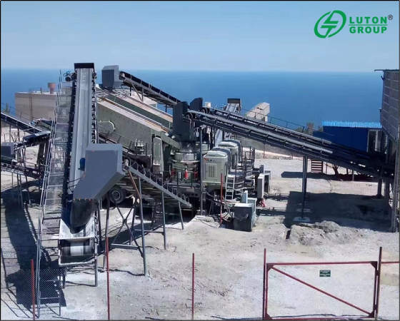
The crushing plant is a core equipment in mining, construction and aggregate production, which transforms raw materials into the desired finished products through multi-stage crushing and screening. The modern crushing plant is highly modularized in design and is equipped with various adjustable functions to adapt to different material characteristics and production requirements. This article will deeply analyze the key adjustable functions of the crushing plant and their application strategies.
Adjustment Function of the Feeding System
1. Vibration Feeder Amplitude and Frequency
- Adjustment Range: Amplitude 3-10mm, Frequency 10-25Hz
- Function:
- Low amplitude (3-5mm) + High frequency (20Hz): Suitable for powdery or damp materials, preventing accumulation
- High amplitude (8-10mm) + Low frequency (12Hz): Suitable for handling large rocks, enhancing feeding efficiency
- Case: When iron ore is crushed, adjust the amplitude to 7mm and the frequency to 15Hz to ensure that 500mm raw ore is evenly fed into the jaw crusher
2. Control of Gate Opening in Silo
- Electric/Hydraulic Adjustment: Adjustable from 0% to 100% continuously
- Linked Strategy: Automatically adjusted according to the load of the crusher to maintain stable throughput (fluctuation < ±5%)
Core Adjustable Parameters of Crushers
1. Jaw Crusher
- Adjustment of Discharge Width
- Mechanical Adjustment: Adjusted by wedges or spacers, range 50-200mm (e.g., for PE1200×1500 models)
- Hydraulic Adjustment: Advanced models support remote control operation, with precision up to ±1mm
- Optimization of Moving Jaw Motion Trajectory
- Adjust eccentric shaft speed (200-300rpm) and stroke (20-60mm) to balance crushing force and energy consumption
2. Cone Crusher
- Switching of crushing chamber type
- Standard type and short-head type chambers can be replaced to meet the requirements of coarse crushing (≤300mm) and fine crushing (≤50mm)
- Hydraulic system adjustment
- Overhead protection pressure: Set value 15-35 MPa (higher value is recommended for hard rock)
- Axial floatation range of the main shaft: Adjustable from 0 to 10mm, reducing wear of the liner plates
3. Impact Crusher
- Rotor Speed Adjustment
- The range is 800-1800 rpm. The higher the rotor speed, the finer the finished product particle size (e.g., from 0-40mm to 0-10mm)
- Counter-Strike Plate Gap Adjustment
- The gap of the first-level counter-strike plate is 30-150mm, and the gap of the second-level is 15-50mm. This controls the number of material impacts.
For details on crushing plants, you're recommended to visit the website lutonmachinery.com.
Dynamic Adjustment of Screening System
1. Adjustment of Vibrating Screen Parameters
- Amplitude and Inclination Angle:
- Amplitude: 4-8mm (adjusted by counterweights)
- Screen surface inclination angle: 10°-25° (adjusted by hydraulic cylinders, with an accuracy of ±0.5°)
- Screen Mesh Combination Strategy:
Target Particle Size (mm)
Recommended Screen Mesh Configuration
0-5/5-20/20-40
Three-layer sieve (aperture: 5mm, 20mm, 40mm)
0-10/10-30
Double-layer sieve (10mm + 30mm)
2. Wind Selection Dust Removal System Adjustment
- Fan Speed: Variable frequency control, range 800 - 2800 rpm
- Damper Opening: Adjusts dust collection efficiency (optimal negative pressure value -800 to -1200 Pa)
Intelligent Control of Conveying System
1. Variable Speed Adjustment
- Range: 0.5 - 4 m/s. Linked with the output of the crusher (e.g., when the output of the jaw crusher is 300 t/h, the belt speed is set at 2.5 m/s)
2. Automatic Correction for Deviation Prevention
- Detects deviation through laser sensors and adjusts the angle of the electric rollers (±5°)
Adjustable Items of the Intelligent Control System
1. Grain Size Closed-loop Control
- The data from the online particle size analyzer (such as laser diffraction instrument) is fed back to the crusher, and the discharge port is automatically adjusted:
- Set the target particle size at 25mm, and the system dynamically adjusts the range by ±3mm
2. Capacity Balance Algorithm
- Automatically allocate the load based on the status of each section of the crusher (current, temperature), maximizing the overall efficiency:
- When the load of the cone crusher is greater than 90%, reduce the feeding volume of the front jaw crusher by 10%
Setting of Safety Protection Parameters
1. Vibration Monitoring Threshold
- Warning when bearing vibration velocity exceeds 7.1mm/s, and shutdown when it exceeds 11mm/s.
2. Temperature Protection
- Trigger the cooling system when lubricating oil temperature exceeds 75℃, and emergency shutdown when it exceeds 90℃.
3. Metal Detection Interlock
- Automatic stop of feeding and alarm when a ferrous object larger than 50mm is detected.
Typical Adjustment Cases
Case 1: Production of Granite Aggregate (Target Particle Size: 0-5/5-10/10-20mm)
- Adjustment Plan:
- Adjust the discharge opening of the jaw crusher to 150mm (from coarse crushing to ≤200mm)
- Select a short-head cavity type for the cone crusher, with a discharge opening of 8mm
- Set the inclination angle of the vibrating screen at 18° and the amplitude at 6mm
- Effect: Needle and flake content < 10%, production capacity increased to 250t/h
Case 2: Ultra-fine Crushing of Iron Ore (-3mm Particle Size > 90%)
- Adjustment Scheme:
- Adjust the gap of the high-pressure roller mill to 2mm and the pressure to 12kN/cm²
- Increase the rotational speed of the impact crusher rotor to 1600rpm
- Set the fan speed of the air separation system at 2200rpm to remove -0.075mm fine particles
- Effect: Achieves 30% energy savings compared to traditional processes
Maintenance and Calibration Recommendations
1. Daily Inspection Items:
- Hydraulic system pressure deviation (error from set value < ±5%)
- Screen tension (deflection < 3mm/m²)
2. Monthly Calibration:
- Calibration of laser particle size analyzer (verify error with standard sample < ±2%)
- Sensitivity test of vibration sensor
Mastering the adjustable functions of the crushing station can significantly increase the qualified rate of finished products (up to over 98%) and reduce energy consumption per ton (by 15-25%).