Categories
- All Categories
- Technology
- Health
- Other
- Arts & Culture
- Business
- Shopping
- Family & Home
- Entertainment
- Personal
Tags
-
#games
#movies
#123movies
#Motorcycle
#fun88
#quran tafseer course
#word game
#DMX splitter
#trivia games for adults
#Smart Pole
#Ceramic coating Toronto
#Landing Craft
#bali construction
#bologna airport to Florence
#wholesale Mig welder
#etched metal nameplates
#Wedding Planner in Istanbul
#CBR1000RR fairing kit
#Renovations in Bali
#cosy homeer
#Indoor stair treads
#industrial curtain rods
#wrap around curtain rod
#Alice in Wonderland live show in Istanbul
#client onboarding
#Ombre gel nail polish
Archives
How a Wrap Around Curtain Rod Creates a Seamless Window Design
-

The quest for a perfectly dressed window is a fundamental aspect of interior design, where every detail contributes to the overall aesthetic and functionality of a space. While fabric, color, and pattern often take center stage, the hardware that supports these elements is the unsung hero that can make or break the final look. Among the various options available, the wrap around curtain rod stands out as a superior choice for those seeking a clean, continuous, and highly professional finish. This innovative design solution addresses a common frustration with standard rods: the unsightly gap between the window casing and the wall that allows light to leak in and compromises both privacy and visual cohesion. By elegantly curving at a 90-degree angle to hug the wall, a wrap around curtain rod ensures that drapery panels can be drawn completely past the window frame, effectively eliminating light gaps and creating a truly seamless transition from window to wall. This article will explore the mechanics, benefits, and professional considerations for integrating this essential hardware into your design projects.
The Problem with Standard Curtain Rods
For decades, homeowners and designers have grappled with the limitations of traditional straight curtain rods. These rods are typically mounted on brackets that hold them several inches away from the wall. While this is necessary for the curtains to open and close freely, it creates an inherent design flaw.
When the curtains are drawn closed, the panels stack at the outer edges of the window, leaving a significant triangular gap of exposed window and wall at each corner. This gap is not merely a visual eyesore; it has practical consequences. It allows unwanted sunlight to filter into a room early in the morning or late in the evening, which can be particularly disruptive in bedrooms. It also compromises insulation and energy efficiency, as drafts can enter and exit through this opening. Furthermore, for those seeking complete privacy or a dedicated home theater space, these light leaks undermine the very purpose of having curtains or blackout drapes. The standard solution—using excessively wide curtains or unsightly fabric ties to hold the panels against the wall—is often clumsy and fails to deliver a polished, intentional look.
The Engineering of a Flawless Finish: How the Wrap Around Curtain Rod Works
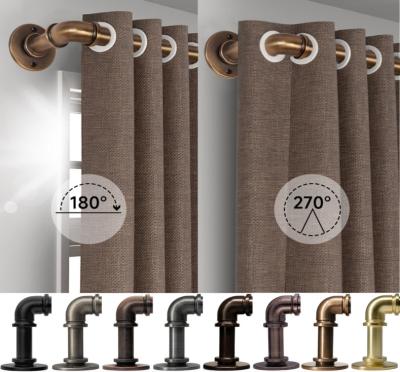
The wrap around curtain rod is engineered with a simple yet brilliant solution to this perennial problem. Its design features a main straight section, identical to a traditional rod, but it incorporates a curved corner piece that allows the rod to extend along the adjacent wall. This key component is what sets it apart.
The installation process begins much like any other rod. Brackets are securely mounted to the wall above the window frame. The magic happens when the rod is installed. Instead of ending at the bracket, the rod continues and bends at a precise 90-degree angle, running parallel to the wall for a custom-defined distance. This design allows the curtain panels to be drawn completely past the edge of the window casing and onto the flat plane of the wall. When closed, the curtains are pulled taut against the wall surface, effectively sealing off all four sides of the window. The hardware itself is often designed to be minimalist and discreet, ensuring that the focus remains on the drapery and the clean lines it creates. The functionality of a wrap around curtain rod is a perfect marriage of form and function, resolving a practical issue while elevating the design.
Key Benefits Beyond Aesthetics
While the seamless look is the most immediately noticeable advantage, opting for a wrap around curtain rod offers a suite of benefits that enhance the living experience.
-
Superior Light Control and Blackout Capability: This is the primary functional benefit. By completely eliminating light gaps, these rods are the definitive choice for creating true blackout conditions. This is invaluable for nurseries, shift workers who sleep during the day, and home media rooms where controlling ambient light is critical for screen visibility.
-
Enhanced Energy Efficiency: Drapery, especially thermal or heavy lined varieties, acts as an insulating layer. The wrap around curtain rod ensures this layer is complete, with no gaps for cold air to infiltrate in the winter or cool air to escape in the summer. This creates a more consistent room temperature and can contribute to lower energy bills.
-
Maximized Privacy: The complete coverage provided ensures that there are no accidental sightlines into the room from angled viewpoints outside. This offers unparalleled privacy, a crucial factor for ground-floor apartments or homes close to the street or neighbors.
-
Protection for Interiors: Consistent exposure to direct sunlight can cause irreversible fading and damage to furniture, artwork, flooring, and fabrics. The comprehensive coverage offered by a wrap around curtain rod provides superior protection against harmful UV rays, preserving your interior investments for longer.
-
A Streamlined, Custom-Built Appearance: The finished result looks intentional, professional, and high-end. It gives the impression of a custom-designed window treatment, elevating the entire room’s decor. The curtains appear as a solid, architectural feature rather than simply a piece of fabric hung on a rod.
Professional Considerations for Selection and Installation
To achieve the optimal result with a wrap around curtain rod, careful planning and execution are required. Here are key professional tips to guide the process.
Choosing the Right Materials and Finish
A wrap around curtain rod must be robust. The extended leverage created by the wall-mounted section places different stresses on the rod and brackets compared to a standard design. Therefore, selecting a rod made from high-quality, durable materials like solid steel or thick, reinforced aluminum is paramount. The finish should complement other hardware in the room, such as light fixtures or cabinet pulls, for a cohesive look. Popular finishes include matte black, brushed nickel, oil-rubbed bronze, and crisp white.
Precise Measurement is Critical
The success of this system hinges on accurate measurements. You must measure not only the width of the window but also the depth of the window casing (the trim around the window) and the desired return length—the distance the rod extends along the wall. A standard return is typically between 3.5 to 5 inches, but this can be customized based on the specific window and wall. It is always advisable to consult the manufacturer’s guidelines for the specific wrap around curtain rod you purchase.
Installation Best Practices
Proper installation is non-negotiable. The brackets must be anchored securely into wall studs or using appropriate heavy-duty drywall anchors to support the weight of the curtains and the unique pressure of the design. The rod must be perfectly level to ensure the curtains hang and function correctly. For very wide windows or heavy drapes, a center support bracket may be necessary to prevent the main rod from sagging over time. While a competent DIYer can handle the installation, consulting a professional installer can guarantee a flawless and secure result.
Conclusion: The Definitive Choice for Discerning Design
In the meticulous world of interior design, it is the attention to hidden details that separates the ordinary from the extraordinary. The wrap around curtain rod is a quintessential example of such a detail. It moves beyond being a mere utilitarian object and becomes an integral component of a well-executed design scheme. By solving the practical problems of light leak, energy loss, and compromised privacy, it delivers unparalleled performance. Simultaneously, it bestows a crisp, custom, and profoundly seamless appearance that elevates the elegance of any window treatment.
-