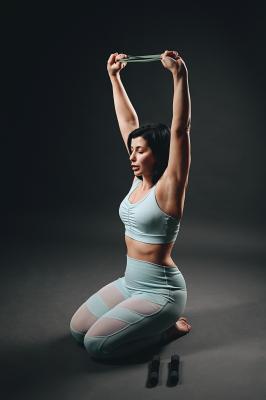
The Power of Resistance Bands: A Workout Versatile Tool
-
In the ever-evolving world of fitness, resistance bands have emerged as an essential piece of workout equipment for individuals of all fitness levels. Whether you are a beginner looking to ease into strength training or an advanced athlete seeking to diversify your routine, resistance bands offer a versatile, effective, and convenient way to build strength, improve flexibility, and enhance mobility.
Why Choose Resistance Bands?
Resistance bands provide a wide range of benefits that make them an excellent addition to any home workout routine. Here are some key reasons to incorporate them into your fitness regimen:
-
Versatility: Resistance bands can be used for a variety of exercises, targeting different muscle groups, including arms, legs, back, chest, and core.
-
Cost-Effective: Unlike bulky gym equipment, resistance bands are affordable and provide the same level of resistance training as traditional weights.
-
Portability: Lightweight and easy to store, resistance bands can be taken anywhere, allowing you to maintain your workout routine even while traveling.
-
Joint-Friendly Workouts: Resistance bands reduce stress on joints compared to heavy weights, making them ideal for individuals recovering from injuries or dealing with joint pain.
-
Progressive Resistance: Bands come in varying levels of resistance, allowing for gradual progression and customized intensity levels to match fitness goals.
How to Use Resistance Bands in Your Workout
Resistance bands can be used in numerous ways to enhance strength training, flexibility, and rehabilitation. Below are some effective exercises that can be performed with resistance bands:
1. Lower Body Exercises
-
Squats: Place the band around your thighs and perform squats to activate glutes and thighs.
-
Lunges: Use a resistance band under your front foot and pull upward to add resistance.
-
Glute Bridges: Wrap the band around your thighs and lift your hips for a glute-activating workout.
2. Upper Body Exercises
-
Bicep Curls: Step on the band and curl it upward to work your biceps.
-
Shoulder Press: Stand on the band and press upward for shoulder engagement.
-
Tricep Extensions: Anchor the band overhead and extend your arms to target triceps.
3. Core and Mobility Exercises
-
Russian Twists: Hold the band between both hands and rotate your torso to engage obliques.
-
Side Leg Raises: Loop the band around your ankles and raise one leg sideways for hip strength.
-
Seated Row: Anchor the band to a stable surface and pull it towards your torso to strengthen the back.
Vibration Plate for Recovery and Performance Enhancement
Incorporating a vibration plate into your recovery routine can further amplify the benefits of resistance band workouts. A vibration plate is a device that uses high-frequency vibrations to stimulate muscles, improve circulation, and enhance recovery. Here are some key benefits:
-
Muscle Activation: The rapid vibrations engage muscle fibers, improving strength and endurance.
-
Enhanced Blood Circulation: Increased circulation helps deliver oxygen and nutrients to muscles, promoting faster recovery.
-
Improved Flexibility: Vibration plates help reduce muscle stiffness and increase range of motion.
-
Reduced Muscle Soreness: The vibrations help break up lactic acid buildup, reducing post-workout soreness.
-
Balance and Stability: Standing on a vibration plate while performing exercises improves core stability and coordination.
Using a vibration plate for a few minutes before or after a resistance band workout can maximize results, enhance muscle activation, and support proper recovery.
Deep Tissue Massage for Effective Recovery
Proper recovery is crucial for maintaining peak performance and preventing injuries. One of the most effective recovery methods is deep tissue massage, which targets tight muscles and alleviates soreness. Benefits of deep tissue massage include:
-
Reduces Muscle Tension: Helps release tight knots and chronic muscle stiffness.
-
Promotes Relaxation: Enhances mental relaxation and reduces stress levels.
-
Improves Circulation: Boosts blood flow to muscles, aiding in faster healing.
-
Prevents Injuries: Regular deep tissue massage can help prevent muscle imbalances and overuse injuries.
-
Enhances Athletic Performance: By maintaining muscle flexibility, athletes can optimize performance and reduce the risk of injuries.
How to Incorporate Deep Tissue Massage into Your Routine
-
Foam Rolling: Use a foam roller to release tight areas and improve mobility.
-
Massage Guns: A massage gun provides targeted deep tissue therapy to sore muscles.
-
Professional Massage: Scheduling regular deep tissue massage sessions can be beneficial for long-term recovery and muscle maintenance.
Conclusion
Resistance bands, when combined with proper recovery techniques such as vibration plate therapy and deep tissue massage, can significantly enhance your fitness journey. They offer an affordable, joint-friendly, and highly effective way to build strength, improve flexibility, and stay active at home. By integrating these tools into your workout and recovery routine, you can achieve optimal results while minimizing the risk of injuries. Whether you are a beginner or a seasoned athlete, resistance bands, vibration plates, and deep tissue massage provide a well-rounded approach to maintaining overall health and wellness.
-
