Categories
Tags
-
#air jet loom
#rapier loom
#twisting machine
#polyester yarn winding machine
#textile winding machine
#fiber twister
#TFO Twister Machine
#RFTS30D Short Fiber Twister Machine
#texturing machine
#Two-for-One twister for filament yarn
#Two-for-One twisting machine
#carpet yarn straight twisting machine
#Direct Twisting Machine
#blowroom machine
#card machine in textile
#carding machine
#draw frame
#air jet spinning machine
#rotor spinning
#rotor spinning machine
#air jet loom for sale
#fiberglass weaving machine
#high speed rapier loom china
#towel loom
#water jet weaving machine
#Water Jet Loom
#water jet weaving loom
#air jet terry loom
#terry towel machine
#loom towels
#automatic weaving machine
#Full-Automatic Drawing-In Machine
#complex Drawing-in Machine
#jersey knitting machine
Archives
RFJW05 Water Jet Looms
-
RFJW05 Water Jet Loom
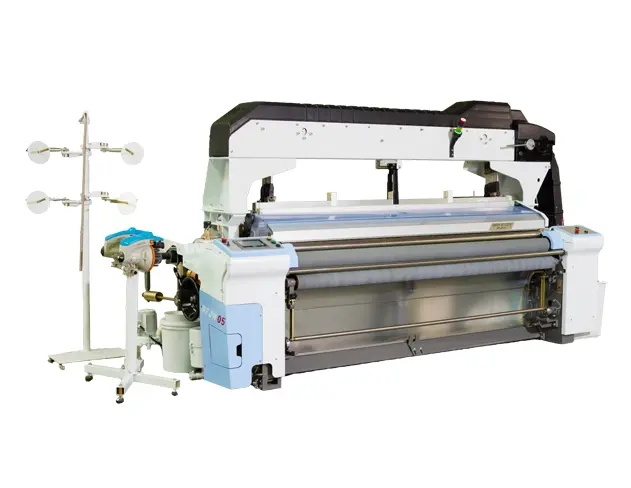
The RFJW05 series water jet machine textile is a mid-range model developed based on RIFA’s advanced shuttleless loom technologies, including those used in its air jet looms. It is designed with the core concepts of energy saving, low power consumption, high speed, high efficiency, and broad adaptability to a wide range of fabric types.
Specification of RFJW05 water jet textile machine
FEATURES
Features of RFJW05 Water Jet Looms
1
Good frame structure of the water jet loom.
2
Rich configuration.
3
Convenient operability.
4
Active promotion of green weaving.
5
Wide weaving adaptability.
6
Intelligent control system.
Why Choose RFJW05 as Your Water Jet Loom?
Green Weaving
RIFA is committed to sustainable and energy-efficient textile manufacturing. The RFJW05 water jet loom adopts an optimized transmission structure to ensure smoother operation and significantly reduce energy consumption, supporting the company’s goal of green weaving.
Integrated Frame
The water jet loom features a box-type wallboard structure with intermediate supports, which enhances the overall structural stability of the machine. This design is specifically engineered to support high-speed operation while minimizing vibration, ensuring reliable performance during continuous weaving.
Electronic Take-up
The water jet textile machine features servo control integrated with high-precision mechanical transmission, which enhances the uniformity of cloth tension during take-up, minimizes cloth marking issues, and improves overall cloth surface quality.
Electronic Let-Off
The water jet textile machine features servo control and a high-density warp tension feedback device, which ensures uniform warp tension during weaving and minimizes fabric defects.
Double Jet Structure
The new ceramic nozzle effectively enhances the jet concentration of weft insertion. Its height and front-to-back position are easily adjustable, making the machine suitable for a wide variety of fabrics.
Direct Drive Motor
The direct drive motor accurately controls the stop angle of the loom and, combined with flexible control, effectively reduces fabric marking issues. The transmission structure is simplified by eliminating the clutch brake, enhancing maintenance convenience. Improved motor efficiency enables approximately 15% energy savings.