Precision Fermentation-Derived Biomaterials
-
Posted by Komal Komal Filed in Health #Precision Fermentation-Derived Biomaterials #Precision Fermentation-Derived Biomaterials Market #Global Precision Fermentation-Derived Biomaterials Market #Precision Fermentation-Derived Biomaterials Market Size 34 views
Introduction
As the world confronts climate change, resource scarcity, and the environmental cost of traditional manufacturing, a new class of materials is emerging at the intersection of biotechnology and industrial innovation. Precision fermentation-derived biomaterials are rapidly gaining attention as a scalable, sustainable alternative to petroleum-based plastics, animal-derived materials, and resource-intensive industrial processes. By programming microorganisms to produce high-performance materials at the molecular level, precision fermentation is redefining how we design, manufacture, and consume materials in the 21st century.
Definition
Precision fermentation–derived biomaterials are materials produced by genetically programmed microorganisms that synthesize specific proteins, polymers, or other bio-based compounds through controlled fermentation processes, yielding highly consistent, scalable, and sustainable alternatives to animal- or petrochemical-derived materials for use in applications such as food, textiles, medicine, and industrial manufacturing.
What Is Precision Fermentation?
Precision fermentation is a biotechnological process that uses genetically engineered microorganisms - such as yeast, bacteria, or fungi - to produce specific target molecules. Unlike traditional fermentation used in brewing or food production, precision fermentation allows scientists to precisely control metabolic pathways so microbes produce desired compounds with high purity and consistency.
In the context of biomaterials, these compounds can include proteins, polymers, enzymes, and structural molecules that mimic or outperform conventional materials. The process typically takes place in bioreactors, where microorganisms are fed sugars or other feedstocks and optimized for yield, efficiency, and quality.
Biomaterials Redefined
Biomaterials derived from precision fermentation are not limited to biodegradable plastics or simple bio-based alternatives. They encompass a broad range of advanced materials with applications across industries such as textiles, construction, healthcare, electronics, packaging, and consumer goods.
Some key categories include:
-
Structural proteins (e.g., collagen, elastin, spider silk)
-
Biopolymers (e.g., polyhydroxyalkanoates, cellulose-based materials)
-
Functional coatings and films
-
Bio-based foams and composites
-
Medical-grade scaffolds and hydrogels
These materials can be engineered at the molecular level, offering precise control over strength, elasticity, durability, and biodegradability - capabilities that are difficult or impossible to achieve with traditional manufacturing.
Why Precision Fermentation Matters
1. Sustainability and Environmental Impact
One of the strongest drivers of precision fermentation-derived biomaterials is sustainability. Traditional materials - such as plastics, leather, and synthetic fibers - are heavily reliant on fossil fuels, toxic chemicals, and energy-intensive processes. Precision fermentation offers a significantly lower environmental footprint by:
-
Reducing greenhouse gas emissions
-
Minimizing land and water use
-
Eliminating animal agriculture impacts
-
Enabling circular and biodegradable material systems
Life cycle assessments often show substantial reductions in carbon emissions compared to petroleum-based or animal-derived counterparts.
2. Scalability and Consistency
Unlike materials harvested from animals or plants, fermentation-based production is highly scalable and independent of climate, geography, or seasonality. Bioreactors can operate year-round, producing consistent material quality batch after batch. This reliability is especially important for industrial and medical applications where precision and reproducibility are critical.
3. Material Performance and Customization
Precision fermentation allows materials to be designed from the ground up. Scientists can tweak genetic code to modify molecular structure, resulting in materials with tailored properties such as:
-
Increased tensile strength
-
Improved flexibility or elasticity
-
Enhanced thermal stability
-
Controlled degradation rates
This level of customization opens the door to entirely new material classes rather than simple replacements for existing ones.
Key Applications of Precision Fermentation-Derived Biomaterials
Textiles and Fashion:
The fashion industry is one of the largest contributors to global pollution. Precision fermentation is enabling alternatives to leather, silk, and synthetic fibers without animal cruelty or petrochemicals. Fermentation-derived collagen and silk proteins are already being spun into fibers and fabrics with luxury-grade performance and reduced environmental impact.
Packaging and Consumer Goods:
Biopolymers produced via fermentation offer compostable and recyclable alternatives to single-use plastics. These materials can be engineered for barrier properties, flexibility, and durability, making them suitable for food packaging, personal care products, and household goods.
Construction and Industrial Materials:
Emerging biomaterials are being explored for insulation, adhesives, foams, and composite materials in construction. Their lightweight nature, strength, and potential carbon-negative production make them attractive for sustainable building solutions.
Medical and Healthcare Applications:
Precision fermentation-derived biomaterials are particularly valuable in healthcare due to their purity and biocompatibility. Applications include wound dressings, tissue engineering scaffolds, drug delivery systems, and implantable materials. Fermentation allows for animal-free, medical-grade materials with reduced risk of immune reactions.
Challenges and Limitations
Despite its promise, precision fermentation-derived biomaterials face several challenges:
-
Cost competitiveness: Scaling fermentation to compete with cheap petrochemical materials remains a hurdle, although costs are decreasing rapidly.
-
Feedstock sustainability: Many processes rely on sugar inputs, raising questions about agricultural impact and supply chains.
-
Regulatory complexity: Novel materials must navigate evolving regulatory frameworks, especially in medical and food-contact applications.
-
Infrastructure needs: Large-scale biomanufacturing requires significant investment in fermentation facilities and downstream processing.
Addressing these challenges will require collaboration between biotech startups, material scientists, policymakers, and established industrial players.
Future Trends of Precision Fermentation-Derived Biomaterials Market
Technological Advancements:
Rapid progress in synthetic biology, metabolic engineering, and AI-driven strain optimization is improving production efficiency, material performance, and cost competitiveness, accelerating commercial-scale adoption.
Expanding Industrial Applications:
Precision fermentation-derived biomaterials are moving beyond niche uses into textiles, packaging, construction, and medical devices, driven by demand for high-performance and sustainable alternatives.
Sustainability and Regulatory Support:
Growing environmental regulations and corporate sustainability goals are encouraging the shift toward bio-based materials with lower carbon footprints and reduced reliance on fossil resources.
Cost Reduction and Scale-Up:
Investments in large-scale biomanufacturing infrastructure and alternative feedstocks are expected to significantly reduce production costs, making these biomaterials more accessible to mass markets.
Strategic Partnerships and Investment Growth:
Collaborations between biotech startups, material manufacturers, and global brands, along with increased venture capital and public funding, are shaping a robust and competitive market landscape.
Growth Rate of Precision Fermentation-Derived Biomaterials Market
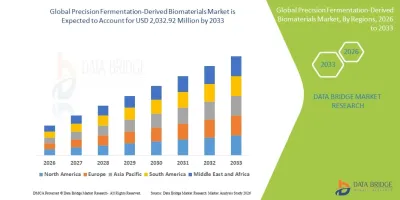
According to Data Bridge Market Research, the precision fermentation-derived biomaterials market was estimated to be worth USD 803.68 million in 2025 and is projected to grow at a compound annual growth rate (CAGR) of 12.30% to reach USD 2,032.92 million by 2033.
Learn More: https://www.databridgemarketresearch.com/reports/global-precision-fermentation-derived-biomaterials-market
Conclusion
Precision fermentation-derived biomaterials represent a paradigm shift in how materials are created and valued. By harnessing the power of microorganisms and molecular precision, this technology offers a path toward high-performance materials that align with environmental sustainability and ethical production. While challenges remain, the rapid pace of innovation suggests that precision fermentation will play a central role in shaping the future of materials, industry, and the planet itself.
-