Categories
Tags
Archives
Is 96R the Same Size as 48 or 94R Battery?
-
The 96R battery is a member of the Battery Council International (BCI) system of group sizes in the battery system, standardizing the size of batteries, the positioning of their terminals, and the performance rating of all the batteries in the automotive market. The 96R battery is generally approximately 9.6 inches in length, 6.9 inches in width, and 6.9 inches in height, with the reversed terminals being denoted by the R. The size is typically a popular Ford, Lincoln, and Mercury choice and a common go-to size across all three car companies. Its small size means that it has just sufficient power whilst fitting into cars with limited battery spaces, although it must not be expected that it is the same as the other groups, such as the 48 or the 94R.
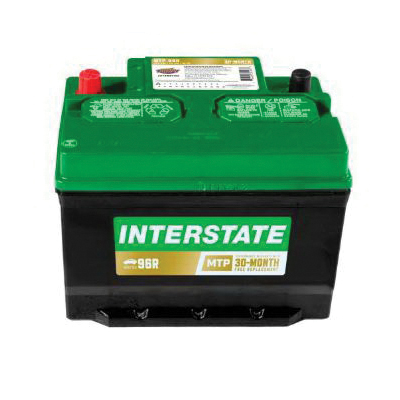
Differences Between Group 96R and Group 48 Batteries
The 96R and 48 group batteries are not identical, even though both of them belong to the BCI system. Group 48 battery, also known as H6, is a physically larger battery; it has a length of around 12.1 inches, a width of 6.9 inches and a height of 7.5 inches. This increased size enables Group 48 to provide greater cold cranking amps (CCA) and longer reserve capacity than that of 96R. Nonetheless, it is larger in size and, as a result, cannot fit in a car meant to accommodate a 96R battery. Trying to squeeze a Group 48 into a 96R tray may break adjacent components and cause electrical connection problems.
Differences Between Group 96R and Group 94R Batteries
This Group 94R battery, termed H7, is larger still than the 48. It is approximately 12.4 inches long, 6.9 inches wide, and 7.5 inches high, which is a lot larger than the smaller 96R. This size is most commonly used in European cars such as BMW, Mercedes-Benz, and Audi, which have more electrical requirements for luxury features and electronics. Although a 94R battery has greater power and reserve, it cannot fit in a 96R battery because they are not compatible. Cars that require a 96R will not accommodate the length and height of a 94R, regardless of power advantages.
Why Size Compatibility Matters
Selecting an inappropriate size of battery group is not merely an issue of whether it will fit under the hood. An overly large battery may also perch on mounting attachments, rub parts of the engine, or may not be able to fit into place at all. Conversely, a battery that is smaller than the one indicated can move about during driving, posing a safety risk and can also cause disconnection of electrical terminals. Automakers design battery compartments of specific group sizes, i.e., a 96R battery should only be installed in a vehicle that is designed to receive that size, not in one that requires a 48 or 94R.
The Bottom Line: 96R vs. 48 vs. 94R
The answer to the issue directly: No, the 96R battery is not the same size as the 48 and 94R batteries. Although they have some similarities in the width, the dissimilarities in the length, height and total capacity render them non-interchangeable. Group 48 and 94R are larger with greater cranking power and reserve capacity; however, they will not fit in a car specified as 96R without major modification. As long as you have a Ford or other similar model requiring 96R, then it is most recommended to remain at that group size to ensure a suitable fit, safety, and performance. A replacement battery should always be purchased with your owner's manual, or it is best to ask a reliable mechanic.