Balasen CNC Turning
-
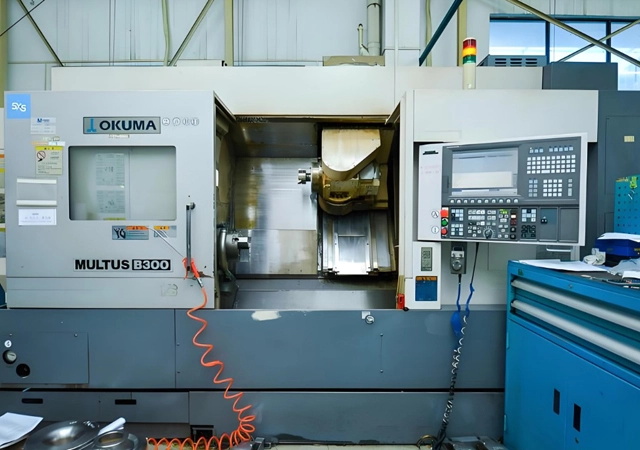
CNC (Computer Numerical Control) turning is a subtractive manufacturing process where a workpiece rotates at high speed while a cutting tool removes material to achieve the desired shape. It is widely used for producing cylindrical or rotationally symmetric components, such as shafts, bushings, and flanges. CNC turning machines (lathes) are programmed with precise instructions to automate operations, ensuring high accuracy and repeatability.
Advantages of CNC Turning
1. High Precision and Accuracy
Tight Tolerances: CNC turning achieves tolerances as low as ±0.001 mm (0.00004 inches), critical for aerospace, medical, and automotive industries.
Repeatability: Automated programming ensures identical parts in large production runs.
2. Enhanced Efficiency
Reduced Setup Time: Quick tool changes and pre-programmed workflows minimize downtime.
Multi-Axis Capability: Modern CNC lathes (e.g., 5-axis) perform complex operations (e.g., milling, drilling) in a single setup.
3. Material Versatility
Compatible with metals (aluminum, steel, titanium), plastics, ceramics, and composites.
Optimized for both soft and hard materials.
4. Reduced Waste
Precision toolpaths minimize material removal errors, lowering scrap rates.
5. Automation and Safety
Minimal human intervention reduces labor costs and operator error.
Enclosed workspaces enhance safety during high-speed operations.
Efficiency Factors in CNC Turning
1. Production Speed
Rapid Cutting: High spindle speeds (up to 10,000 RPM) and advanced toolpaths reduce cycle times.
Batch Production: Ideal for high-volume orders due to consistent output.
2. Tooling Optimization
Carbide Inserts: Durable tools with coatings (e.g., TiN, TiAlN) extend tool life and enable higher cutting speeds.
Automatic Tool Changers (ATC): Reduce idle time by switching tools mid-operation.
3. Energy Efficiency
Modern CNC machines incorporate energy-saving modes and regenerative drives.
4. Software Integration
CAM (Computer-Aided Manufacturing) software optimizes toolpaths, predicts errors, and simulates processes.
Key Parameters in CNC Turning
1. Spindle Speed (RPM)
Determines rotational speed of the workpiece.
Example: Aluminum: 1,000–3,000 RPM; Stainless Steel: 200–500 RPM.
2. Feed Rate (mm/rev or in/rev)
Speed at which the cutting tool advances along the workpiece.
Higher feeds increase productivity but may compromise surface finish.
3. Cutting Depth (mm or inches)
Depth of material removed per pass.
Roughing: Deeper cuts (0.5–5 mm); Finishing: Shallow cuts (0.1–0.5 mm).
4. Tool Geometry
Insert Shape: Diamond (CNMG), triangular (TNMG), or round (RCMX) for specific applications.
Rake Angle: Affects chip formation and heat dissipation.
5. Material Properties
Hardness, thermal conductivity, and machinability dictate parameter adjustments.
6. Coolant and Lubrication
Flood coolant or mist systems reduce heat, extend tool life, and improve surface finish.
7. Tolerance and Surface Finish
Surface Roughness (Ra): Typically 0.8–3.2 µm for turned parts.
Dimensional Accuracy: Controlled via machine calibration and tool wear monitoring.
As a china aluminum cnc turning parts factory, we can provide kinds of china aluminum cnc turning parts and brass cnc turned parts italy for sale. If you want to buy cnc turning, please contact us.
There are many china aluminum cnc turning parts suppliers, but we are one of the best choices for you.
If you want to know more about metal casting process video, please visit our website.
Balasen Equipment Co., Ltd. is located in Xuzhou, Jiangsu Province. We have been dedicated to metal casting, including sand castings, shell castings and machining.
Our products find applications in industries such as construction, agricultural machinery, Mining machinery, automotive, and valves. We are constantly striving to expand our business and enhance our capabilities. Although we are currently in a stage of growth and not as large as some industry leaders, we are committed to improving and making a mark in the market.