When Switching from a Gang Saw to a Multi-Wire Saw Actually Mak
-
Switching from a gang saw to a multi-wire saw is not a neutral upgrade. For factories cutting high-value stone at scale, the change can permanently improve yield and consistency. For others, it introduces cost and complexity without delivering proportional returns.
The key difference is not technology. It is whether the factory has reached the point where material loss and consistency matter more than simplicity and familiarity.
From a procurement perspective, the mistake is not choosing the “wrong” machine. The mistake is switching before the operation is ready for it.
What Actually Improves After the Switch
When the switch is made at the right time, three improvements are consistently observed.
First, material yield improves in a measurable, cumulative way. Thinner kerf alone may look minor per cut, but across thousands of slabs, the recovered material quickly becomes significant — especially for granite and other hard stone.
Second, slab consistency stabilizes. Multi-wire systems reduce thickness variation between slabs, which directly lowers downstream trimming and rework. For factories supplying large projects or export markets, this consistency often matters more than headline throughput.
Third, planning becomes easier. Once cutting results become predictable, scheduling and downstream processes can be standardized. This is an operational advantage that does not appear in technical brochures but has real cost implications.
Factories evaluating multi wire saw machine performance usually discover that these indirect gains outweigh the raw speed increase they originally focused on.
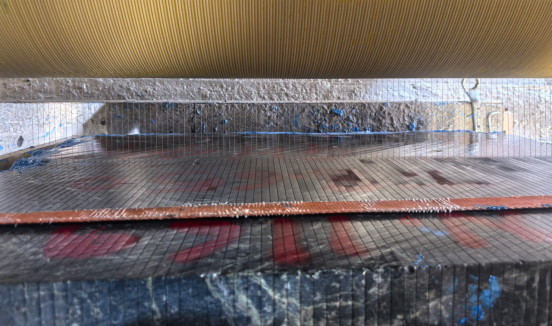
DINOSAW multi-wire saw marble block cutting machine
What Usually Gets Worse — and Why Some Factories Regret the Switch
The downside is equally real and should not be minimized.
Multi-wire systems demand tighter operational discipline. Wire tension, guide condition, and parameter consistency matter far more than with a gang saw. When procedures are loose, wire wear accelerates and breakage becomes frequent.
Maintenance also becomes less forgiving. Small deviations that would be tolerated on a gang saw can quickly degrade output quality on a multi-wire system. For factories without strong maintenance routines, this creates frustration rather than efficiency.
This is why some buyers conclude that the machine “did not meet expectations.” In most cases, the technology worked — the operation was simply not ready.
When a Gang Saw Is Still the Better Decision
Despite industry trends, a gang saw remains the smarter choice in several common scenarios.
A gang saw is usually the better option when:
• Slab thickness tolerance is flexible
• Material cost pressure is moderate
• Production volume is stable rather than aggressively scaling
• Maintenance resources are limited
In these environments, the simplicity and robustness of a gang saw reduce risk. The operational cost savings of a multi-wire system do not offset the added complexity.
For buyers comparing gang saw setups with newer alternatives, the correct starting point is not efficiency metrics, but operational maturity.
The Hidden Cost of Switching Too Early
The most expensive switch is not the wrong machine — it is the premature switch.
Factories that change systems before they are ready often experience:
• Increased wire consumption without yield improvement
• Higher downtime during troubleshooting
• Output gains canceled by rework and instability
These costs rarely appear in ROI calculations, yet they dominate the first year of operation when the switch is mistimed.
The One Question That Decides Everything
Experienced buyers eventually reduce the decision to a single question:
Is material loss now a bigger problem than operational complexity?
If the answer is yes, a multi-wire system usually pays off.
If the answer is no, a gang saw remains the more economical and controllable solution.
This framing removes ambiguity and forces the decision to align with the factory’s current reality, not industry momentum.
Conclusion: This Is a Timing Decision, Not a Technology Decision
The move from gang saw to multi-wire saw is not about adopting newer equipment. It is about recognizing when the economics of your operation have shifted.
Factories that switch at the right time rarely look back. Factories that switch too early often spend years compensating for a problem they didn’t actually have.