Categories
Tags
-
#isc spring
#Belleville Disc Springs
#Belleville springs
#Serrated Safety Washers
#disc spring
#Wave Washers
#disc springs
#Belleville Spring
#How Many Times Can You Use a Belleville Washer?
#What are the advantages of Belleville springs?
#How do Belleville disc springs work?
#Design Considerations for Belleville Washers in Engineering Applications
#What are the advantages of Belleville washers?
#Function and Benefits of Belleville Disc Springs
#Selecting the Right Belleville Washer for Your Application
#Spring Washer
#Spring Washers
#Wave Spring
Archives
The Versatility and Benefits of Disc Springs in Engineering App
-
Disc springs, also known as Belleville springs, are highly versatile components widely used in various engineering applications. These springs are known for their unique design, which allows them to provide a high amount of force within a small space. Disc springs are composed of several conical discs stacked on top of each other, with the outer diameter being larger than the inner diameter. The resulting spring is highly flexible and can be used in a range of applications.
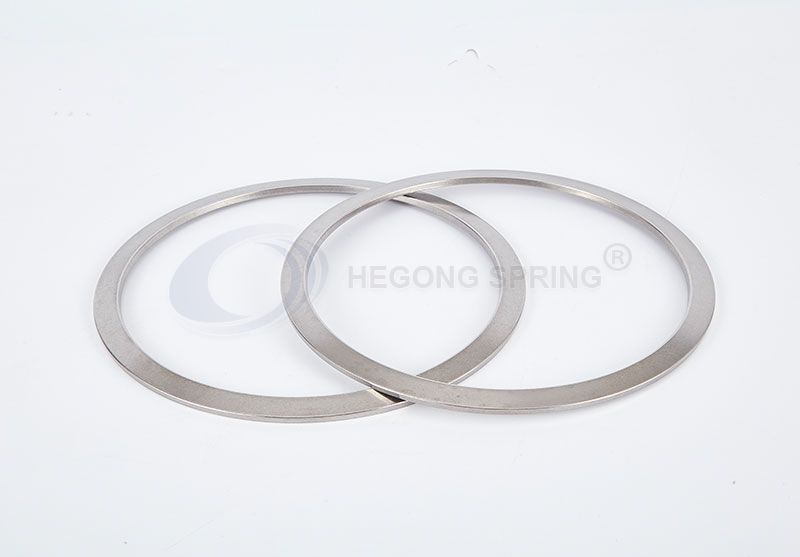
One of the primary benefits of disc springs is their ability to provide a high load capacity while taking up minimal space. This makes them an excellent choice for applications where space is limited or where a high amount of force needs to be generated in a small area. Additionally, disc springs are highly resistant to fatigue, which means they can withstand repeated cycles of loading and unloading without suffering from fatigue failure.
Another benefit of disc springs is their ability to maintain a consistent load over time. Due to their design, disc springs can provide a constant force even as they compress or expand. This makes them ideal for applications where a consistent force is required, such as in automotive suspensions or industrial machinery.
Disc springs are also highly customizable, with manufacturers able to produce them in a range of materials, sizes, and configurations to meet the specific needs of an application. Some of the most common materials used in disc spring production include stainless steel, carbon steel, and alloys such as Inconel or Hastelloy. This allows engineers to select a disc spring material that provides the optimal balance of strength, durability, and corrosion resistance for their particular application.
Disc springs are used in a wide range of applications, including automotive, aerospace, industrial machinery, and medical devices. In the automotive industry, disc springs are used in suspension systems, clutches, and brakes. In aerospace, they are used in landing gear and wing flap systems. In industrial machinery, disc springs can be found in shock absorbers, valve actuators, and safety relief valves. In medical devices, they are used in implantable devices and surgical instruments.
In addition to their use in traditional engineering applications, disc springs are also finding new uses in emerging technologies. For example, disc springs are used in the design of nanotechnology devices, such as atomic force microscopes, which require precise and repeatable force control. They are also used in robotics and automation systems, where they can provide a compact and efficient means of generating force.
In conclusion, disc springs are highly versatile components with a range of benefits that make them an ideal choice for many engineering applications. Their ability to provide a high load capacity in a small space, maintain a consistent load over time, and resist fatigue make them an attractive option for many industries. As technology continues to advance, we can expect to see new and innovative uses for disc springs in a range of emerging fields. More information please contact disc spring manufacturer