Categories
Tags
-
#Ball Bearings
#ball bearing
#Bearings
#Tapered roller bearings
#roller bearings
#precision ball bearings
#Bearing
#Aerospace Bearings Market
#Overhead Conveyor trolley wheel
#rolling bearings
#Cylindrical Roller Bearings
#Overhead Conveyor Bearings
#What are the advantages of cylindrical roller bearings?
#Advantages of Using Cylindrical Roller Bearings
#Frequently Asked Questions About Roller Bearings
#Ball Bearings vs. Roller Bearings
Archives
Differences and Uses of Ten Types of Bearings
-
Bearing is a pivotal component in mechanical equipment. Its main function is to support the mechanical rotating body and to reduce the coefficient of friction of the mechanical load of the equipment in the transmission process.
Bearings are divided into: radial bearings and thrust bearings according to the bearing direction or nominal contact angle. According to the type of rolling body, they are divided into: ball bearings, roller bearings. According to the ability to adjust, divided into: spherical bearings, non-spherical bearings (rigid bearings). According to the number of columns of rolling body, divided into: single row bearing, double row bearing, multi-row bearing. According to the parts can be separated, divided into: separable bearings, non-separable bearings. In addition, there are classifications according to structure shape and size. This article mainly shares the characteristics, differences and corresponding uses of 10 common bearings.
1. Angular contact ball bearing contact angle between the collar and the ball, the standard contact angle of 15 °, 30 ° and 40 °, the greater the contact angle axial load capacity is also greater, the smaller the contact angle is more conducive to high-speed rotation, single row bearing can bear radial load and one-way axial load. Structure for the back of the combination of two single-row angular contact ball bearing common inner and outer ring, can withstand radial load and two-way axial load.
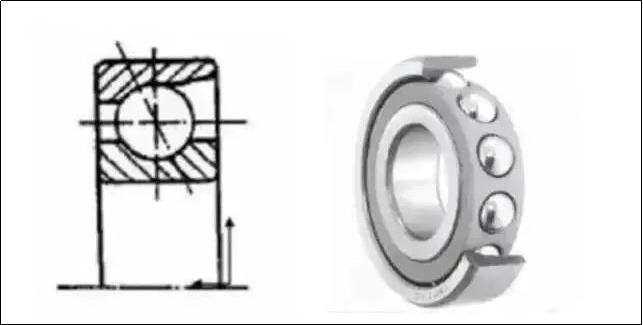
Angular contact ball bearing
Main use: single row: machine tool spindle, high frequency motor, gas turbine, centrifugal separator, small car front wheel, differential pinion shaft. Double row: oil pump, roots blower, air compressor, all kinds of transmission, fuel injection pump, printing machinery.
2. Spherical ball bearing double rows of steel balls, outer ring raceway for the inner spherical type, so it can automatically adjust the shaft or shell due to deflection or different heart caused by the shaft incorrect, tapered hole bearings by using fasteners can be easily installed on the shaft, mainly to bear radial load.
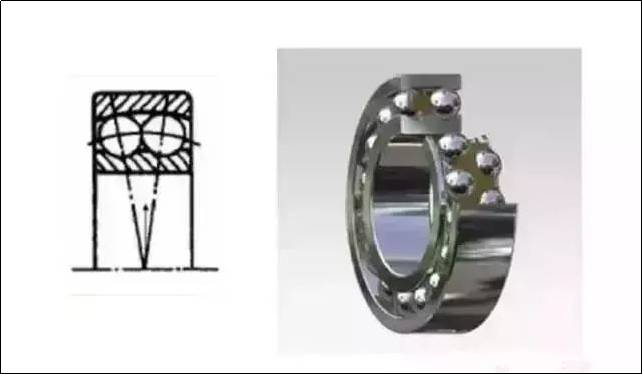
Spherical ball bearing
Main use: woodworking machinery, textile machinery drive shaft, vertical with seat spherical bearing.
3. Spherical roller bearings in the spherical raceway outer ring and double raceway inner ring with spherical roller, according to the different internal structure, divided into R, RH, RHA and SR four types, because the outer ring raceway arc center and bearing center, with spherical performance, so can automatically adjust the shaft or shell deflection or different heart caused by the axis of the incorrect, can withstand radial load and two-way axial load.
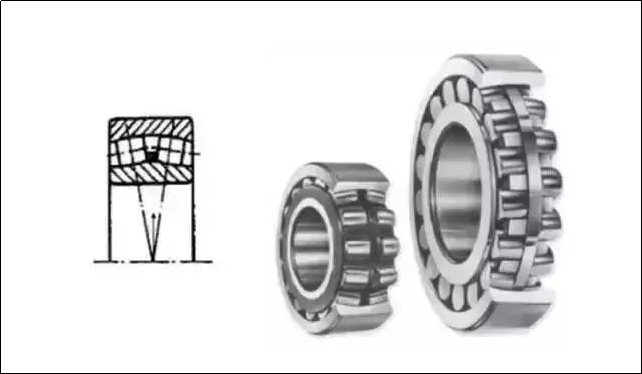
The main use of spherical roller bearings: paper making machinery, speed reducing device, railroad vehicle axle, rolling mill gear box seat, rolling mill roller sub, crusher, vibrating screen, printing machinery, woodworking machinery, all kinds of industrial reducer, vertical with seat spherical bearing.
4. Thrust spherical roller bearings in this type of bearing spherical roller tilting arrangement, due to the seat ring raceway surface is spherical, with spherical performance, so the shaft can be allowed to have a number of tilt, axial load capacity is very large, in the axial load can also withstand a number of radial load, the use of general oil lubrication.
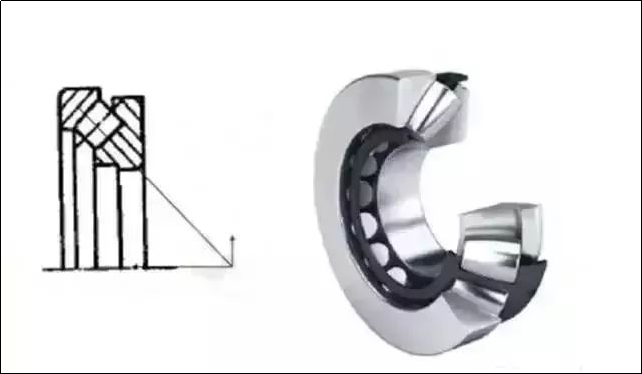
Thrust spherical roller bearings
Main uses: hydroelectric generators, vertical motors, ships with propeller shaft, steel rolling mill rolling screw with reducer, tower crane, coal mills, extruders, forming machines.
5. Tapered roller bearings such bearings are equipped with circular table shaped rollers, rollers by the inner ring large retaining edge guidance, design makes the inner ring raceway surface, outer ring raceway surface and roller rolling surface of each tapered surface of the apex intersected in the bearing center line on a point. Single row bearing can bear radial load and one-way axial load, double row bearing can bear radial load and two-way axial load, suitable for bearing heavy load and shock load.
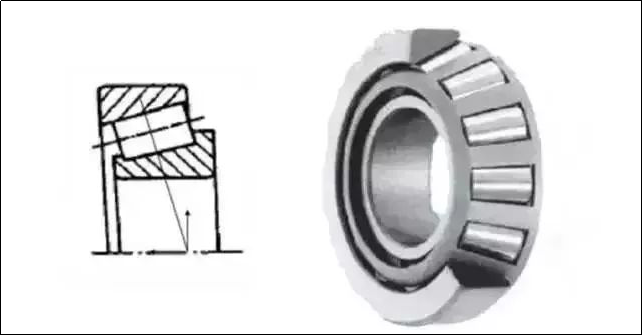
Tapered roller bearings
Main uses: automotive: front wheel, rear wheel, transmission, differential pinion shaft. Machine tool spindle, construction machinery, large agricultural machinery, railroad vehicle gear reduction device, rolling mill roll neck and reduction device.
6. Deep groove ball bearing in the structure of deep groove ball bearing each ring has a cross-section of about one-third of the equatorial circumference of the ball continuous groove type raceway. Deep groove ball bearing is mainly used to bear radial load, but also can bear a certain axial load. When the radial clearance of the bearing increases, with the nature of angular contact ball bearing, can withstand two directions of alternating axial load. Compared with other types of bearings of the same size, this type of bearing has a small coefficient of friction, high limiting speed and high precision, which is the bearing type preferred by users when selecting the type.
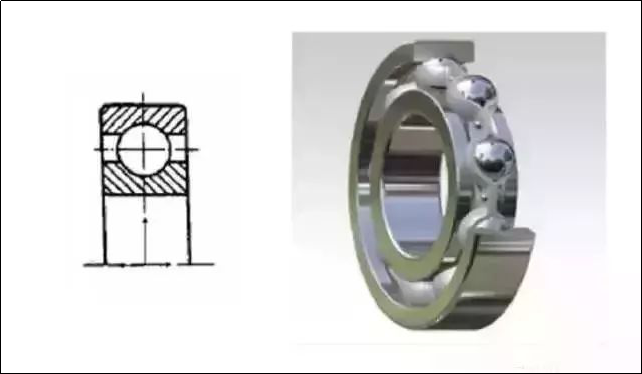
Deep groove ball bearings are mainly used in: automobiles, tractors, machine tools, motors, pumps, agricultural machinery, textile machinery, etc.
7. Thrust ball bearings
By the gasket-shaped raceway ring with raceway and ball and cage components, with the shaft with the raceway ring is called the shaft ring, with the shell with the raceway ring is called the seat ring. Two-way bearing will be in the circle secret shaft with, one-way bearing can bear one-way axial load, two-way bearing can bear two-way axial load (both can not bear radial load).
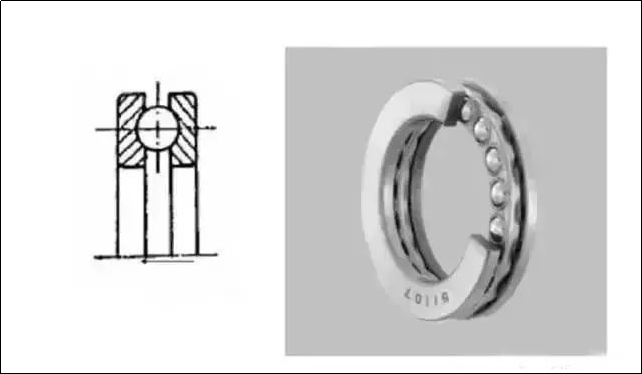
Thrust ball bearing
Main use: car steering pin, machine tool spindle.
8. Thrust roller bearings thrust roller bearings are used to bear axial load mainly shaft, by the joint load, but the load shall not exceed 55% of the axial load. Compared with other thrust roller bearings, this kind of bearing friction factor is lower, higher speed, and has the ability to adjust the heart. 29000 type bearing roller for asymmetric spherical roller, can reduce the stick and raceway in the work of relative sliding, and roller long, large diameter, the number of rollers load capacity, usually using oil lubrication, individual low speed case available grease lubrication.
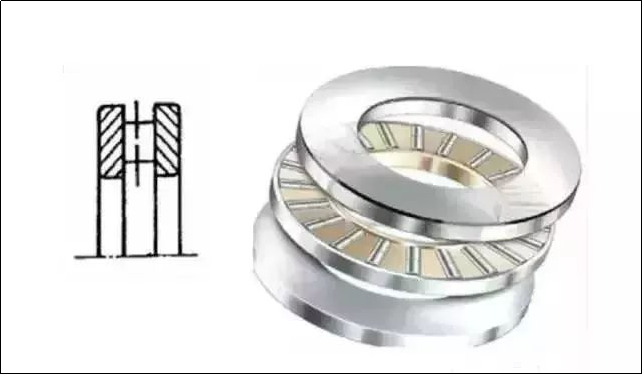
The main use of thrust roller bearings: hydroelectric generators, crane hooks.
9. Cylindrical roller bearing roller usually by a bearing collar of two retaining edge guide, keep frame roller and guide collar to form a combination, can be separated from another bearing collar, belong to the separable bearing. This kind of bearing installation, disassembly is more convenient, especially when the requirements of the inner and outer ring and shaft, shell are interference with the advantages of more show. Such bearings are generally only used to bear radial load, only the inner and outer rings are with the edge of the single bearing can withstand a smaller constant axial load or a larger intermittent axial load.
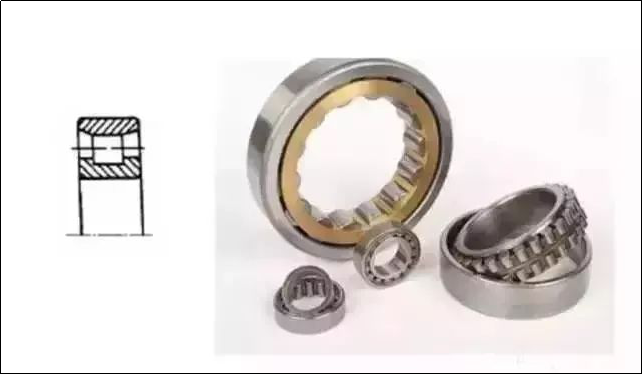
Cylindrical roller bearing
Main use: large motors, machine tool spindles, axle shaft box, diesel engine crankshaft, automobile, the change box of TOJUN, etc.
10. Four point contact ball bearing can bear radial load and two-way axial load, a single bearing can replace the front combination or back combination of angular contact ball bearing, suitable for bearing pure axial load or axial load component of a larger synthetic load, the bearing with any direction of axial load can form one of the contact angle, so the collar and ball always in any contact line of two sides three knife point contact.
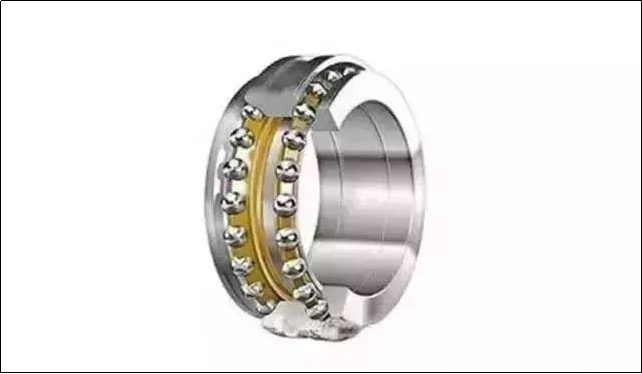
Four-point contact ball bearing