DIY Carpet Tiles in Real UK Homes: What Actually Works

  • click to rate

    There’s a reason more UK homeowners are quietly switching to carpet tiles instead of traditional fitted carpet. Once you’ve dealt with muddy shoes in winter, pet accidents on cream carpet, or that one hallway area that always wears out first, the idea starts to make a lot more sense.

    For years, carpet tiles had a bit of an “office flooring” reputation. Most people associated them with corporate buildings, schools, or rented commercial spaces. But lately, they’ve found their way into spare bedrooms, loft conversions, home offices, utility rooms, and even living rooms across the UK.

    And honestly, once you’ve installed them yourself, it’s easy to see why.

    You don’t need expensive carpet fitting tools. You don’t need to move out of the room for days. And if one section gets damaged later, you replace a tile instead of an entire floor.

    For busy households, especially homes with dogs, children, or heavy foot traffic, that practicality matters far more than people realise at first.

    The good news is that laying carpet tiles yourself is genuinely achievable for most homeowners. The bad news is that there are still plenty of ways to mess it up if you rush the process or ignore the boring preparation work.

    Here’s what actually helps when installing carpet tiles at home, based on the kinds of problems people run into in real UK houses.


    Why Carpet Tiles Make Sense for UK Homes

    Traditional carpet still has its place, but British homes come with a few realities that make carpet tiles surprisingly practical.

    The weather is the first one.

    Wet shoes, muddy paws, damp coats, and condensation are simply part of life here for much of the year. In high-traffic areas, fitted carpet can start looking tired much faster than people expect.

    Carpet tiles solve that problem differently. Instead of treating the floor as one giant piece, you’re effectively working with modular sections. If one area gets ruined, you swap that section out.

    That alone changes how people use a room.

    You stop worrying quite so much about accidents or wear because maintenance becomes manageable instead of expensive.

    This is especially noticeable in:

    • Hallways
    • Home offices
    • Utility rooms
    • Pet areas
    • Children’s playrooms
    • Converted lofts

    A lot of UK homeowners also discovered during the remote working boom that hard flooring plus office chairs can become noisy very quickly, particularly in upstairs rooms or flats. Carpet tiles help soften sound without making a room feel overly warm or old-fashioned.


    Self-Adhesive Carpet Tiles vs Traditional Stick-Down Tiles

    Before buying anything, it helps to understand the two main styles people usually install at home.

    Self-adhesive carpet tiles are the easiest option for beginners. You peel the backing and press them directly onto the floor. They’re popular because they reduce installation time dramatically and don’t require separate glue.

    For spare rooms, rentals, small offices, or quick refresh projects, they’re often the simplest route.

    The downside is that alignment matters immediately. Once stuck down, repositioning can be awkward. Cheap self-adhesive tiles also vary massively in quality, especially with long-term adhesion.

    Non-adhesive carpet tiles usually require tackifier glue or another fixing method. They take a little longer to install but tend to feel more forgiving and stable over time, particularly in larger rooms or heavy-use areas.

    If you’re doing a hallway, busy family room, or somewhere pets constantly run through, the extra prep is often worth it.


    The Biggest DIY Mistake: Ignoring the Subfloor

    Most carpet tile problems start underneath the tiles, not on top of them.

    People get excited, open the boxes, and start laying immediately. Then a few weeks later they notice lifting corners, uneven joins, or tiles shifting slightly.

    Nearly every time, the real issue is floor preparation.

    The subfloor must be:

    • Dry
    • Clean
    • Flat
    • Stable

    This matters more in the UK than in some other countries because older British houses often have uneven floors, hidden damp issues, or loose floorboards.

    Even small imperfections become visible once tiles settle.

    If you’re working with concrete, check for moisture first. A surprising number of older properties hold residual damp, especially ground-floor rooms. If moisture is trapped underneath, adhesives weaken over time.

    For wooden floors, secure any squeaking or loose boards before installation. Carpet tiles will not magically hide movement beneath them.

    Vacuum thoroughly before starting. Dust reduces adhesion far more than people realise.


    Why Room Temperature Actually Matters

    One thing beginners often overlook is acclimatisation.

    Carpet tiles need time to adjust to the room before installation. In the UK, where indoor temperatures and humidity fluctuate constantly, this step genuinely helps.

    Leave the boxes in the room for at least 24 hours before fitting them.

    Cold tiles installed immediately after delivery can expand slightly later, which affects alignment and edge consistency.

    This becomes especially important during winter or damp weather.


    Start from the Centre, Not the Wall

    This single tip makes the biggest visual difference.

    A lot of first-time DIYers naturally begin along the longest wall, assuming it will keep things straight. Unfortunately, most UK rooms are not perfectly square, especially in older houses.

    If you start from one edge, small errors multiply as you move across the room. By the end, your final row may look noticeably uneven.

    Starting from the centre creates balance.

    Measure carefully, mark your centre lines, and work outward evenly. This keeps cut pieces along the walls more symmetrical and gives the floor a much more professional appearance.

    Chalk lines help enormously here. It feels like an unnecessary extra step until you realise how easily tiles drift off-line over several rows.


    Pattern Layouts Make a Bigger Difference Than Expensive Tiles

    One of the best things about carpet tiles is the freedom to create layouts that fitted carpet simply cannot offer.

    Even affordable tiles can look surprisingly premium when installed thoughtfully.

    Some popular DIY approaches include:

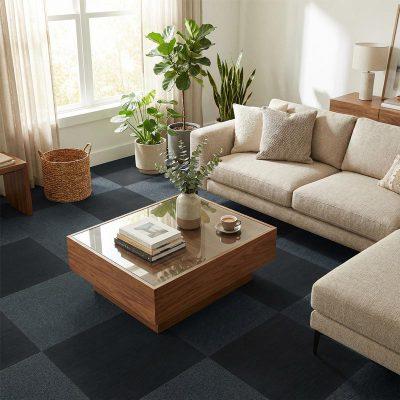
    Checkerboard layouts
    Alternating pile directions
    Subtle stripe effects
    Border framing around room edges
    Feature zones in home offices

    Rotating every other tile by 90 degrees creates a slightly textured look that hides dirt and wear brilliantly, especially useful in busy homes with pets.

    This technique also disguises minor alignment imperfections, which helps beginners enormously.


    Carpet Tiles and Pets: Why They Work So Well Together

    People with dogs often become carpet tile converts very quickly.

    Traditional carpet can become stressful once accidents, muddy paws, or scratching enter the picture. Replacing an entire fitted carpet over one damaged area feels frustrating and expensive.

    With carpet tiles, maintenance becomes more realistic.

    If one tile gets damaged:

    • Lift it
    • Replace it
    • Done

    Good-quality self-adhesive carpet tiles with anti-slip backing also help prevent shifting when pets run across the room.

    Another underrated benefit is noise reduction. Dogs running across laminate flooring can sound surprisingly loud, especially in terraced homes or upstairs flats. Carpet tiles soften impact noise significantly.

    For homes with older dogs, the extra grip can also help reduce slipping on hard floors.


    The Right Tools Make Installation Much Easier

    You don’t need specialist carpet fitting equipment, but a few simple tools make a noticeable difference:

    • Sharp utility knife
    • Metal straight edge
    • Tape measure
    • Chalk line
    • Heavy roller
    • Spare blades

    Fresh blades matter more than people expect. Dull blades create ragged cuts around skirting boards and door frames, which immediately makes a DIY installation look amateur.

    Change blades regularly instead of trying to stretch one too far.


    Common Problems People Notice After Installation

    Even well-installed carpet tiles behave slightly differently from traditional carpet.

    One thing beginners sometimes notice is that tile edges become more visible under strong daylight initially. This usually softens as the tiles settle.

    Another common issue is slight lifting at corners. In most cases, this comes from poor floor prep or insufficient pressure during installation.

    Using a heavy roller after laying tiles helps significantly. Many people skip this and regret it later.

    Vacuuming direction also affects appearance. Different pile directions can create subtle shade variations depending on lighting. This is completely normal and part of the carpet tile look.


    Small DIY Tricks That Make the Floor Look Better

    A few small decisions can make your installation feel much more polished.

    Keep spare tiles from the same batch number. Colours can vary slightly between production runs, so future replacements match better if you save extras.

    If the room has natural light from one dominant direction, test tile orientation before committing fully. Carpet pile reflects light differently depending on direction.

    For awkward-shaped rooms, dry-lay a few rows first without sticking them down permanently. It helps you spot alignment problems early.

    In high-traffic doorways, slightly firmer pressure during installation helps edges stay cleaner over time.


    Are Carpet Tiles Worth It for a DIY Home Project?

    For many UK homes, honestly, yes.

    Not because they are trendy or fashionable, but because they solve practical problems extremely well.

    They work especially well for people who want:

    • Easier maintenance
    • Better durability
    • Simpler repairs
    • A manageable DIY project
    • Flooring suitable for pets or family life

    You don’t need advanced DIY skills to get good results. What matters more is patience during preparation and careful alignment during installation.

    Most people who struggle with carpet tiles are not failing because the product is difficult. They are usually rushing the process.

    Take your time with the layout. Prepare the floor properly. Keep everything straight from the beginning.

    Do that, and even a modest DIY setup can end up looking far more professional than many people expect.