Categories
Tags
-
#concrete
#asphaltplant
#Self Loading Concrete Mixer
#Concrete Batching Plant
#concrete pump
#trailer concrete pump
#Jaw Crusher
#Mobile Concrete Batching Plant
#Asphalt Mixing Plant
#concrete plant
#Crushing Plant
#crushing equipment
#crusher machines
#cone crusher
#stationary crushing plant
#Brick Making Machine
#self loader concrete mixer
#DUMP TRUCK
#Concrete Equipment
#mobile crushing plant
#Construction Equipment
#concrete pumping machinery
#concrete production
#construction machinery
#concrete mixing plant
#concrete boom pump
#selfloadingconcretemixer
#doubledrumasphaltmixingplant
#asphalt concrete
#asphalt batching plant
#concretebatchingplant
#operator of concrete mixing plant
#Aggregate Concrete Mixing Plant
#Hzs90 concrete mixer plant
#concrete pump truck
#automatic control
#concretemixerpump
#controlunit
#Belt-Type 90m³/H HZS90 Station
#concreteplant
#concretemixingplant
#concretemachinery
#concretebatchingmachinery
#Construction Materials
#crushing machine
#electric control
#dust removal equipment
#asphaltbatchingplant
#cold asphalt plant
#concrete mixing plants
#concrete plants
#control system of concrete batching plant
#mortar
#brickes
#crushingequipment
#stonecrusher
#constructioncrushingequipment
#mobile crushing equipment
#crushing machinery
#concrete pumping equipment
#concrete batching plants
#weighing methods of concrete plant
#automatic concrete batching plant
#concrete pumping control system
Archives
Selection Guide for Crushing Equipment in Tropical Region
-
Posted by Mavis Chai Filed in Technology #crushingequipment #stonecrusher #constructioncrushingequipment 32 views
The construction environment in tropical regions is characterized by high temperature, high humidity, heavy rainfall, and complex terrain, which imposes strict requirements on the durability, efficiency, and adaptability of crushing equipment. From the marine corrosion environment of Penang Second Bridge in Malaysia to the fragmentation of clay layers in tropical rainforests in South America, equipment selection needs to balance technical performance and ecological protection, achieving a balance between efficient operation and sustainable development.
The Core Challenge Of Tropical Environment For Crushing Equipment
High Temperature and High Humidity Accelerate Material Aging
The average daily temperature in tropical regions often exceeds 35 ℃, with humidity exceeding 80%. Metal components are prone to rusting, and the aging rate of hydraulic system seals accelerates. For example, during the construction of Penang Second Bridge, the corrosion rate of ordinary steel increased by three times compared to temperate regions in the alternating environment of seawater and humid heat, forcing the construction party to use silane coating to protect concrete pipe piles.
Heavy Rainfall Caused Work Interruption
In areas with an annual precipitation of more than 2000 mm, rainstorm may cause debris flow or equipment trapping. A mine project in Brazil was once shut down for 12 hours in rainstorm due to the lack of waterproof motor, resulting in a direct loss of more than 500000 dollars.
Complex Geology Increases The Difficulty Of Fragmentation
Tropical rainforest areas are often accompanied by geological conditions of weathered granite, clay layers, and solitary rocks. A highway project in Indonesia shows that traditional jaw crushers have a feed blockage frequency of up to 3 times per hour when processing clay containing ores, resulting in a 40% decrease in efficiency.
Key Technical Dimensions For Equipment Selection
Corrosion Resistance And Heat Dissipation Design
Material selection: Priority should be given to key components treated with 316L stainless steel or hot-dip galvanizing, such as crusher liners and conveyor belt supports. Caterpillar uses nano ceramic coating technology in its Southeast Asian projects, extending the lifespan of hydraulic hammer pistons to 2000 hours, which is three times longer than traditional chrome plating processes.
Cooling system: Equipped with forced air cooling or water cooling devices to ensure that the hydraulic oil temperature is controlled below 60 ℃. The SY215C crusher from Sany Heavy Industry has extended its continuous operation time in a 45 ℃ environment to 8 hours through optimized oil circuit design, which is 50% higher than the previous generation product.
Anti Clogging And Adaptive Crushing Capability
Optimization of feed inlet: adopting adjustable grille design to adapt to materials of different particle sizes. The Sandvik UH640 mobile crushing station is equipped with an intelligent vibrating feeder that can automatically adjust the amplitude according to the humidity of the material. When processing ores with a moisture content of 15%, the blockage rate is reduced to 0.5 times per hour.
Innovation of crushing chamber type: The laminated crushing principle can reduce needle like products and improve the quality of sand and gravel aggregates. Meizuo Nordberg ® The GP series cone crusher, by dynamically adjusting the crushing force, has increased the qualified rate of finished particle shape from 72% to 89% when crushing basalt.
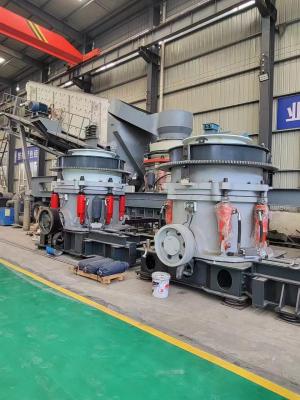
For more practical construction crushing equipment, you're recommended the products from LUTON GROUP.
Modularity And Fast Transition Capability
Tracked chassis: suitable for soft soil foundations such as swamps and sandy areas. The XCMG XE370D crushing excavator adopts a widened track plate design, reducing the ground pressure to 0.03MPa, and no sinking accidents occurred during construction in mangrove areas in Malaysia.
Hydraulic quick change connector: enables quick switching of tools such as hammers and buckets within 3 minutes. The automatic lubrication system equipped on the Volvo EC480DL excavator can reduce equipment downtime for maintenance by 60%, making it suitable for continuous operations in tropical regions.
Typical Scenario Equipment Configuration Scheme
Tropical Rainforest Earthwork Engineering
Core equipment: Mobile crushing and screening station (such as Kleemann Mobirex MR 130 Zi EVO2)+crawler excavator (with hydraulic breaker)
Technical highlights:
Diesel electric dual drive system reduces fuel consumption by 20%;
Integrated dust removal device, meeting the environmental requirements of PM2.5 emissions ≤ 35mg/m ³;
The remote monitoring system provides real-time feedback on equipment status, and preventive maintenance reduces downtime caused by malfunctions.
Mining In Coastal Corrosive Environments
Core equipment: anti-corrosion jaw crusher (such as Sandvik CJ615)+weather resistant steel conveyor belt
Technical highlights:
The key components are made of ASTM A242 Type 1 weather resistant steel, which improves salt spray corrosion resistance by 5 times;
The hydraulic system is equipped with a dual filter element filtration device, with a filtration accuracy of 5 μ m, extending the hydraulic oil replacement cycle to 2000 hours;
The discharge port of the crusher is adjusted by hydraulic pressure, with an accuracy of ± 1mm, to meet the requirements of different particle sizes.
Regeneration Of Construction Waste In High-Temperature Areas
Core equipment: Tire type mobile crushing station (such as Metso Lokotrack LT1213S)+magnetic separator
Technical highlights:
The independent cooling system in the engine compartment ensures stable operation in an environment of 50 ℃;
Intelligent load management system, automatically adjusts engine power according to material hardness, saving 15% energy;
Integrated magnetic separation module, recovers metal impurities such as steel bars, and the purity of recycled aggregates reaches 98%.
Ecological Protection And Sustainable Development Considerations
Low noise design: Adopting a silent breaking hammer (such as Atlas Copco SB 452), the working noise is ≤ 85dB, meeting the requirements of EU environmental regulations.
Dust control: equipped with pulse bag filter, dust emission concentration ≤ 10mg/m ³, saving 60% water compared to traditional wet dust removal.
Biodiversity conservation: Lay temporary steel plates on equipment transfer paths to reduce damage to surface vegetation. A certain iron ore project in Brazil has increased the recovery rate of native plants in the construction area from 45% to 78% through this measure.
Future Technological Trends
Electrification transformation: Lithium ion battery driven crushing equipment can reduce carbon emissions by 30%, such as the Epiroc SB 202 electric crushing hammer, which has been applied in underground engineering in Singapore.
Digital twin technology: Real time collection of device data through sensors, construction of virtual models to optimize job parameters. The Meizuo Outotec Metric platform can predict the wear of crusher liners and extend their service life by 25%.
Self repairing material: Shape memory alloy liner can automatically recover deformation after damage, and the NiTi alloy liner developed by German company Krupp has entered the mining testing stage.
In tropical regions, the selection of crushing equipment needs to break through the traditional single dimension of "performance first" and shift towards a three-dimensional decision-making model of "environmental adaptability+technical reliability+ecological friendliness". With the integration of materials science, intelligent control, and environmental protection technology, the next generation of crushing equipment will have the autonomous ability of "perception decision execution", providing more efficient solutions for tropical infrastructure.