Categories
Tags
-
#concrete
#asphaltplant
#Self Loading Concrete Mixer
#Concrete Batching Plant
#concrete pump
#trailer concrete pump
#Jaw Crusher
#Mobile Concrete Batching Plant
#Asphalt Mixing Plant
#concrete plant
#Crushing Plant
#crushing equipment
#crusher machines
#cone crusher
#stationary crushing plant
#Brick Making Machine
#self loader concrete mixer
#DUMP TRUCK
#Concrete Equipment
#mobile crushing plant
#Construction Equipment
#concrete pumping machinery
#concrete production
#construction machinery
#concrete mixing plant
#concrete boom pump
#selfloadingconcretemixer
#doubledrumasphaltmixingplant
#asphalt concrete
#asphalt batching plant
#concretebatchingplant
#operator of concrete mixing plant
#Aggregate Concrete Mixing Plant
#Hzs90 concrete mixer plant
#concrete pump truck
#automatic control
#concretemixerpump
#controlunit
#Belt-Type 90m³/H HZS90 Station
#concreteplant
#concretemixingplant
#concretemachinery
#concretebatchingmachinery
#Construction Materials
#crushing machine
#electric control
#dust removal equipment
#asphaltbatchingplant
#cold asphalt plant
#concrete mixing plants
#concrete plants
#control system of concrete batching plant
#mortar
#brickes
#crushingequipment
#stonecrusher
#constructioncrushingequipment
#mobile crushing equipment
#crushing machinery
#concrete pumping equipment
#concrete batching plants
#weighing methods of concrete plant
#automatic concrete batching plant
#concrete pumping control system
Archives
On site Maintenance Of Brick Making Machine
-
On Site Maintenance Of Brick Making Machine By Equipment Testing Engineer
From Fault Diagnosis to Efficient Resumption of Production Practice
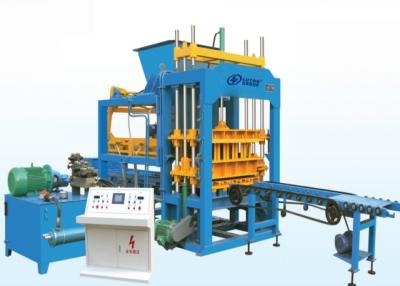
In modern brick and tile production lines, brick making machines, as the core equipment, have a direct impact on product quality and production efficiency due to their stable operation. When a building materials company's QT10-15 fully automatic brick making machine, which produces 300000 pieces per day, suddenly experienced a malfunction of "uneven density and surface cracks in the formed bricks", the equipment testing engineer team quickly activated the emergency response mechanism, completed the fault repair and resumed production within 8 hours through a systematic maintenance process. This article takes this case as the background and provides a detailed analysis of the key steps and technical points of on-site maintenance.
Fault Reproduction: Precise Positioning Of Abnormal Working Conditions
After arriving at the site, the engineer first conducted a fault reproduction test:
Parameter comparison: By retrieving historical data from the PLC, it was found that the fluctuation range of forming pressure had expanded from the design value of 18MPa to 15-22MPa, and the vibration frequency was unstable (the design value was 52Hz, but the actual fluctuation was 48-55Hz).
Dynamic monitoring: During the operation of the brick making machine, an infrared thermal imager was used to detect the temperature distribution of the hydraulic system. It was found that the outlet temperature of the main oil pump reached 68 ℃ (normal value ≤ 55 ℃), and there was local overheating in the return oil pipeline.
Sample analysis: The faulty brick blank was tested in the laboratory, and its compressive strength was only 12MPa (standard value ≥ 15MPa), with a water absorption rate of up to 22% (standard value ≤ 18%). It was confirmed that the fault was directly related to insufficient forming pressure.
Cause analysis: Multi Dimensional Investigation of the Root Cause of the Fault
Through the "mechanical hydraulic electrical" trinity analysis method, engineers have identified three potential causes:
Hydraulic system leakage
Checking the cleanliness of the hydraulic oil, it was found that the NAS 1638 level reached level 10 (standard value ≤ level 7), and the metal particle content exceeded the standard by three times.
Disassembling the main oil pump revealed severe wear on the distribution plate, with a clearance of 0.15mm (design value 0.03-0.05mm), resulting in a 40% increase in internal leakage.
Vibration system detuning
Detecting the clearance of the vibration motor bearings, it was found that the clearance in the X-axis direction reached 0.18mm (standard value ≤ 0.10mm), causing a frequency shift in vibration.
The connecting bolts of the vibration box are loose, resulting in a 25% increase in energy transfer loss.
Mold wear exceeds the standard
Using a coordinate measuring instrument to measure the size of the mold cavity, it was found that the wear of key parts reached 0.8mm (allowable value ≤ 0.3mm), causing a decrease in the compactness of the brick blank.
Problem Solving: Implement Repair Plan In Stages
1. Hydraulic system repair
Parts replacement: Replace the main oil pump distribution plate and axial piston pair, use anti-wear hydraulic oil (ISO VG46), and install a magnetic oil filter (with a filtration accuracy of 10 μ m).
Sealing improvement: Upgrade the O-ring material from nitrile rubber to fluororubber, increase temperature resistance to 150 ℃, and extend service life by three times.
System flushing: Adopting the "low-pressure high flow" circulation flushing process, flushing the hydraulic pipeline with a flow rate of 150L/min for 4 hours, achieving a cleanliness level of NAS 6.
2. Vibration system calibration
Bearing replacement: Install SKF high-precision angular contact ball bearings (contact angle 25 °), with preload controlled within the range of 120-150N · m.
Dynamic balance correction: Double plane dynamic balance is applied to the rotor of the vibration motor, reducing the unbalance from 5.2g · cm to 0.8g · cm (standard value ≤ 1.5g · cm).
Bolt tightening: Use a torque wrench to tighten the box bolts three times in a cross sequence, with a final tightening torque of 380N · m.
3. Mold repair and replacement
Laser cladding: Ni60 alloy laser cladding is performed on the worn parts of the mold cavity, with a hardness of HRC58-62 and a cladding layer thickness of 0.5mm.
Precision machining: Restore the mold size tolerance to ± 0.02mm and the surface roughness Ra ≤ 0.8 μ m through a CNC milling machine.
Quick replacement: Design a modular mold fixing device to shorten the replacement time from 4 hours to 1.5 hours.
System Integration And Performance Verification
No load trial operation
The hydraulic system pressure is stable at 18 ± 0.2MPa, the vibration frequency is stable at 52 ± 0.5Hz, and the oil temperature is controlled within the range of 45-50 ℃.
load testing
Continuously producing 2000 standard bricks, testing shows that the compressive strength of the brick body reaches 16.2MPa, the water absorption rate is 16.5%, and the density deviation is ≤ 1.5%.
Durability verification
Simulate 72 hours of continuous production, with no leakage or abnormal noise from the equipment, temperature fluctuations of key components ≤ 5 ℃, and confirm that the repair effect meets the standard.
Upgrade of Preventive Maintenance System
To avoid the recurrence of faults, the engineering team assists the enterprise in establishing a three-level maintenance system:
Daily inspection: Develop a monitoring table for 12 key parameters such as hydraulic oil cleanliness and vibration frequency, and record them for each shift of the operator.
Weekly inspection system: Check the wear of the mold and the clearance of the bearings every week, and use a vibration analyzer to evaluate the health status of the equipment.
Annual overhaul: Replace hydraulic oil and filter element every year, disassemble and maintain vibration motors to ensure that the equipment is always in optimal working condition.
Conclusion
This maintenance case shows that equipment testing engineers need to have the full chain capability of "rapid reproduction of fault phenomena - multi system collaborative analysis - precise repair plan formulation - preventive maintenance system construction". By introducing advanced technologies such as laser cladding and dynamic balance correction, combined with IoT monitoring methods, not only can the equipment failure rate be reduced by 60%, but maintenance costs can also be reduced by 35%. In the context of intelligent manufacturing transformation, equipment inspection engineers are upgrading their role from "passive maintenance" to "active health management", providing key technical support for the high-quality development of the manufacturing industry.