Categories
Tags
-
#Carbide CNC inserts
#cnc tools
#Precision Carbide Drill Bits
#torx screw
#chamfer tool
#Chamfer Tools
#edge finder
##cnc tools
##cnc machine tool
##cnc tool
##edge finder
#feeler gauge
#turning insert
#knurling tool
#carbide drill
#VNMG tool holders
##cnc tool suppliers
##chamfer tool
##micro boring bar
Archives
How a Chamfer Tool Improves Edge Finishing in CNC Work
-
Learn how a chamfer tool enhances edge finishing in CNC work, improves safety, ensures better assembly, and supports precise machining operations.
CNC Edge Finishing Explained with Chamfer Tools
In CNC machining, edge finishing is not just about appearance—it directly affects part safety, assembly accuracy, and overall product quality. Sharp edges left after machining can cause handling injuries, improper fits, and premature wear. This is where chamfering becomes a crucial finishing operation. By creating a controlled bevel on edges, manufacturers achieve smoother transitions, better aesthetics, and functional reliability in machined components.
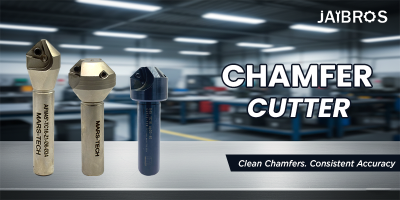
Modern CNC workshops rely on specialized tools to ensure consistent and repeatable chamfering results. Among these, the Chamfer Tool plays a vital role in delivering precise edge finishes across various materials and machining setups. Let’s explore how chamfering enhances CNC work and why choosing the right tool makes all the difference.
Understanding Edge Finishing in CNC Machining
Edge finishing refers to the process of refining sharp or rough edges formed during milling, drilling, or turning operations. Without proper finishing, edges may contain burrs or micro-fractures that compromise the quality of the part.
Common challenges of poor edge finishing include:
-
Difficulty during component assembly
-
Increased risk of chipping or cracking
-
Reduced dimensional accuracy
-
Unsafe sharp edges for operators
Chamfering solves these issues by removing excess material at the edge, creating a clean angled surface that improves both form and function.
What is a Chamfering operation?
A chamfer is an angled cut, typically applied to the edge of a workpiece. Unlike rounding or deburring, chamfering produces a straight, angled surface that is measurable and consistent. This makes it ideal for precision CNC machining where tight tolerances are required.
The Chamfer Tool is specifically designed to perform this operation with accuracy and repeatability, ensuring uniform edge finishing across multiple parts in high-volume production.
How a Chamfer Tool Enhances CNC Edge Finishing
1. Delivers Consistent Edge Quality
One of the biggest advantages of using a chamfering solution in CNC work is consistency. Manual finishing can vary from operator to operator, but CNC-based chamfering ensures identical edge geometry on every component. This uniformity is essential for industries such as automotive, aerospace, and industrial manufacturing.
The Chamfer Tool allows machinists to control the depth and angle of the bevel precisely, resulting in predictable and repeatable results.
2. Improves Assembly and Fitment
Chamfered edges guide mating parts into position more easily during assembly. This is especially important for press-fit components, fasteners, and precision housings. A properly chamfered edge reduces resistance, minimizes alignment issues, and speeds up ***embly processes.
Using the Chamfer Tool helps create clean lead-ins that prevent damage to mating surfaces and improve overall product reliability.
3. Enhances Safety and Handling
Sharp edges pose a serious safety risk on the shop floor and during product use. Chamfering removes these hazards by eliminating razor-sharp corners. This is particularly important for parts that will be handled frequently or exposed during maintenance.
By applying controlled chamfers, manufacturers can meet safety standards while maintaining a professional finish.
4. Supports Complex Manufacturing Applications
Modern CNC machines often produce complex components with internal edges, intersecting holes, and hard-to-reach features. In such cases, standard tools may not be effective.
A back chamfer tool is designed to chamfer edges on the reverse side of holes or internal features. This is extremely useful for parts where flipping the workpiece is impractical or time-consuming.
For vertical machining centers, a back chamfer tool for VMC allows efficient machining of rear edges without compromising accuracy or cycle time.
5. Enables Accurate Angle Selection
Different applications require different chamfer angles depending on function and design requirements. Tool geometry plays a critical role here.
A 30-degree chamfer tool is commonly used for light edge breaking and cosmetic finishing.
A 15-degree chamfer tool is ideal for subtle chamfers where minimal material removal is required, especially on precision components.
Selecting the correct angle ensures optimal performance, whether the goal is improved assembly, stress reduction, or visual appeal.
Productivity Benefits in CNC Operations
Apart from quality improvements, chamfering also boosts productivity. Automated chamfering reduces the need for secondary finishing processes such as hand deburring or polishing. This leads to:
Shorter production cycles
-
Reduced labour costs
-
Lower scrap rates
Better utilization of CNC machines
The Chamfer Tool integrates seamlessly into CNC programs, allowing edge finishing to be completed in the same setup as primary machining operations.
Material Compatibility and Tool Performance
Chamfering tools are used on a wide range of materials, including:
-
Mild and alloy steels
-
Stainless steel
-
Aluminium and non-ferrous metals
-
Plastics and composites
Proper tool selection ensures clean cuts without chatter, excessive wear, or poor surface finish. Coating quality, cutting geometry, and rigidity all influence performance during high-speed CNC operations.
Choosing the Right Chamfer Tool for CNC Work
When selecting a chamfering solution, machinists should consider:
-
Material type and hardness
-
Required chamfer angle and depth
-
Machine capability (VMC, CNC milling, or turning)
-
Internal vs external edge requirements
The Chamfer Tool should match both the machining application and the production volume to deliver consistent results over long tool life.
Quality Control and Final Inspection
Chamfered edges are often part of dimensional inspection criteria. Consistent chamfer width and angle contribute to better compliance with engineering drawings and quality standards. Automated chamfering helps reduce inspection rejections caused by uneven or incomplete edge finishing.
Conclusion
Edge finishing is a critical step in CNC machining that directly impacts safety, assembly, and product performance. By integrating chamfering into CNC workflows, manufacturers can achieve higher consistency, improved aesthetics, and better functional reliability. The Chamfer Tool stands out as an essential solution for precise, repeatable, and efficient edge finishing in modern CNC environments.
About Jaibros:
Jaibros is a trusted name in industrial cutting tools, offering high-quality solutions for CNC machining needs. With a focus on precision, durability, and performance, Jaibros provides reliable tools that help manufacturers achieve superior machining results and long-term productivity.
FAQs
1. Why is chamfering important in CNC machining?
Chamfering removes sharp edges, improves safety, enhances assembly, and ensures better dimensional accuracy in machined parts.
2. What is a back chamfer tool used for?
A back chamfer tool is used to chamfer internal or rear edges of holes where standard tools cannot easily.
3. Can chamfering be done in the same CNC setup?
Yes, chamfering can be integrated into the same CNC program, reducing secondary operations and saving time.
4. How do chamfer angles affect performance?
Different angles serve different purposes—smaller angles are used for light edge breaking, while larger angles support better lead-ins and stress reduction.
5. Is chamfering suitable for all materials?
Yes, with proper tool selection and cutting parameters, chamfering can be performed on metals, plastics, and composite materials.
-