Categories
Tags
-
#Carbide CNC inserts
#cnc tools
#Precision Carbide Drill Bits
#torx screw
#chamfer tool
#Chamfer Tools
#edge finder
##cnc tools
##cnc machine tool
##cnc tool
##edge finder
#feeler gauge
#turning insert
#knurling tool
#carbide drill
#VNMG tool holders
##cnc tool suppliers
##chamfer tool
##micro boring bar
Archives
Chamfer Tool vs Deburring Tool for CNC Work Guide
-
Compare Chamfer Tool and deburring tool for CNC machining. Learn about the back chamfer tool, 30-degree and 15-degree chamfer tool applications and benefits.
Chamfer Tool Compared with Deburring Tool for CNC Work
In CNC machining, achieving a smooth and accurate edge finish is just as important as maintaining dimensional accuracy. Sharp edges, burrs, and rough corners can affect part performance, safety, and final assembly. That’s why machinists rely on specialized cutting solutions to refine edges after primary machining operations. Two of the most commonly used tools for this purpose are the Chamfer Tool and the deburring tool.
Although both are used for edge finishing, they serve slightly different purposes and are selected based on application requirements. In this blog, we’ll compare their design, functionality, advantages, and ideal use cases to help you decide which one fits your CNC work best.
Understanding Edge Finishing in CNC Machining
Edge finishing is a crucial step in manufacturing industries such as automotive, aerospace, medical devices, and general engineering. During milling, drilling, or turning operations, sharp edges and burrs are often created. If not removed properly, these imperfections can:
-
Cause safety hazards during handling
-
Interfere with assembly processes
-
Reduce part lifespan
-
Impact surface aesthetics
-
Lead to stress concentration in metal parts
To eliminate these issues, machinists use either chamfering or deburring tools depending on the design intent.
What Is a Chamfer Tool?
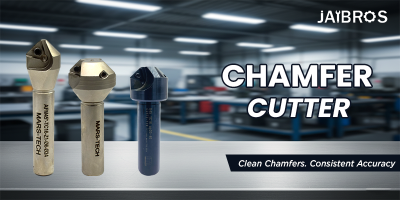
A Chamfer Tool is specifically designed to create a beveled edge at a precise angle along the corner of a workpiece. Instead of simply removing burrs, it cuts a defined angled surface, improving both function and appearance.
Chamfering is often required in applications where parts need smooth insertion, better alignment, or aesthetic enhancement. Common angle variations include the 30-degree chamfer tool and the 15-degree chamfer tool, each suited for different engineering specifications.
Key Features:
-
Produces a consistent angled edge
-
Available in multiple angle configurations
-
Suitable for internal and external edges
-
Ensures high repeatability in CNC setups
In vertical machining centers, a back chamfer tool for VMC is often used to machine the rear side of holes or internal edges that are difficult to access from the front.
What Is a Deburring Tool?
A deburring tool is designed primarily to remove unwanted burrs or rough edges left after machining operations. It does not focus on creating a precise angle but instead smooths out imperfections.
Deburring can be performed manually or through CNC processes. Tools vary from handheld scrapers to rotary deburring cutters used in automated systems.
Key Features:
-
Removes sharp edges and burrs
-
Improves safety and surface finish
-
Used in secondary finishing operations
-
Available in manual and machine-operated types
While deburring improves surface quality, it does not offer the geometric precision provided by a chamfering solution.
Major Differences Between Chamfering and Deburring
Although they seem similar, there are significant differences between chamfering and deburring operations.
1. Purpose
Chamfering creates a defined angled edge for functional or design reasons.
Deburring removes leftover material or sharp projections.
2. Precision
A Chamfer Tool provides exact angle control, such as 15° or 30°.
Deburring tools focus on smoothing rather than angle accuracy.
3. Application
Chamfering is often part of the design specification.
Deburring is typically a finishing correction step.
4. CNC Compatibility
Chamfer tools are commonly integrated into CNC programs for automated edge creation.
Deburring may sometimes require manual finishing depending on complexity.
Types of Chamfering Tools Used in CNC Work
Different machining applications require different chamfering configurations.
1. 30-Degree Chamfer Tool
This is commonly used when a larger bevel is required. It ensures smooth part assembly and is often used in automotive and heavy engineering applications.
2. 15-Degree Chamfer Tool
A 15-degree chamfer tool is ideal for lighter bevels and precision components. It is frequently used in industries requiring fine detailing and minimal material removal.
3. Back Chamfer Tool
A back chamfer tool is specially designed to create chamfers on the backside of holes or edges. This is especially helpful in complex components.
4. Back Chamfer Tool for VMC
The back chamfer tool for VMC is optimized for vertical machining centers, enabling accurate chamfering inside bores without repositioning the workpiece.
Each variation supports high-speed machining and improves operational efficiency.
Advantages of Using a Chamfer Tool in CNC Operations
Using a Chamfer Tool in CNC work provides several benefits:
-
Enhances part durability by reducing stress concentration
-
Improves assembly alignment
-
Provides professional aesthetic finishing
-
Reduces the need for manual finishing
-
Ensures repeatable accuracy across batch production
Because chamfering is integrated into CNC programming, it saves time and improves productivity compared to manual deburring.
Advantages of Using Deburring Tools
Deburring tools also offer important benefits:
-
Quick removal of unwanted burrs
-
Enhances safety during handling
-
However, for parts requiring consistent beveled edges, deburring alone may not meet engineering standards.
When to Choose Chamfering Over Deburring
You should choose chamfering when:
-
The drawing specifies an exact edge angle
-
Parts require smooth insertion into assemblies
-
The component must withstand mechanical stress
-
A professional, uniform finish is required
On the other hand, deburring is sufficient when:
-
The goal is simply to remove sharp edges
-
The part does not require geometric modification
-
Budget constraints limit advanced tooling
In many CNC setups, both operations are used together to achieve optimal results.
CNC Programming Considerations
When integrating a Chamfer Tool into CNC programming, cnc machine tools must consider:
-
Spindle speed and feed rate
-
Material type (steel, aluminum, brass, etc.)
-
Tool coating and wear resistance
For internal features, especially in vertical machining centers, using a back chamfer tool ensures accessibility without repositioning the component.
Deburring programs, on the other hand, often require flexible path adjustments to ensure all burrs are removed effectively.
Industry Applications
Chamfering and deburring tools are widely used across industries:
-
Automotive components
-
Aerospace structural parts
-
Medical implants
-
Industrial machinery
-
Mold and die manufacturing
In high-precision sectors like aerospace, chamfering is usually mandatory as per design standards, while deburring is considered a finishing safety requirement.
Cost and Productivity Comparison
Chamfering tools may have a higher initial cost compared to basic deburring tools. However, they reduce manual labor and increase production speed. Over time, the investment pays off in improved efficiency and part quality.
Deburring tools are economical for small workshops or low-volume production but may increase manual effort in large-scale manufacturing.
Conclusion
Both chamfering and deburring play important roles in CNC machining. While deburring removes unwanted material and improves safety, chamfering creates a defined, functional bevel that enhances part performance and aesthetics. Choosing between the two depends on engineering requirements, industry standards, and production scale.
For manufacturers seeking reliable cutting solutions, selecting the right tooling partner is essential. Jaibros is a trusted name in precision cutting tools and CNC accessories. The company offers high-quality chamfering solutions, including angle-specific and back chamfering tools designed for modern machining needs. With a focus on durability, accuracy, and performance, Jaibros supports industries looking for consistent CNC output and superior finishing results.
FAQs
1. What is the main difference between chamfering and deburring?
Chamfering creates a defined angled edge, while deburring removes unwanted burrs and sharp edges without focusing on angle precision.
2. When should I use a 30-degree chamfer tool?
A 30-degree chamfer tool is ideal when a larger bevel is required for heavy-duty parts or improved assembly fit.
3. What is a back chamfer tool used for?
A back chamfer tool is used to create chamfers on the backside of holes or internal edges that are difficult to access from the front.
4. Is a 15-degree chamfer tool suitable for precision work?
Yes, a 15-degree chamfer tool is commonly used in precision industries where minimal material removal and fine detailing are required.
5. Can chamfering and deburring be used together?
Yes, many CNC processes use chamfering to create defined edges and deburring to remove any remaining sharp projections for optimal finishing.
-