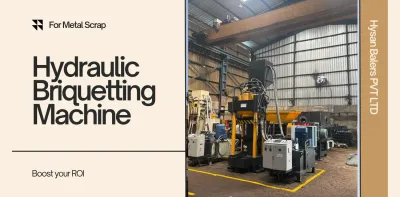
The Hysan Briquetting Press: Turning Waste into Worth, Efficien
-
Posted by Hysan Balers Filed in Technology #briquetting press #briquetting machine #metal briquetting machine #hydraulic briquetting machine 34 views
Blogs » Technology » The Hysan Briquetting Press: Turning Waste into Worth, Efficien
In a world grappling with resource scarcity and mounting waste, the Hysan Briquetting Press emerges as a powerful and pragmatic solution for industries and recycling operations worldwide. This robust machine is engineered to transform loose, difficult-to-handle materials into dense, compact, and uniform briquettes, unlocking value from what was once considered scrap. More than just a compactor, the Hysan press is a cornerstone for sustainable material management, delivering economic and environmental benefits in one efficient package.
At its core, the Hysan Briquetting Press operates on the principle of high-pressure compaction. It takes a wide range of raw materials—from metal shavings (aluminium, steel, copper) and mineral powders (charcoal, lime, gypsum) to agricultural residues (sawdust, rice husk) and other industrial by-products—and compresses them into solid, pillow-shaped or cylindrical blocks. This process is typically hydraulic, ensuring immense, consistent pressure that structurally alters the material, often without the need for binders. The result is a high-density briquette that is easy to transport, store, and handle, while also being ideal for efficient recycling or use as a uniform fuel source.
The advantages of implementing a Hysan Briquetting press are substantial and multi-faceted:
1. Economic Efficiency: The financial benefits are immediate. Briquetting drastically reduces the volume of waste, slashing storage space requirements and lowering transportation and handling costs by up to 90%. Loose turnings and dust become a tidy, stackable commodity. For metal recyclers, clean, dense briquettes command a higher market price than loose scrap, as they melt more efficiently in furnaces with lower oxidation rates and energy consumption. The process also recovers valuable coolants and oils from metal chips, which can be reused or sold.
2. Environmental Stewardship: The Hysan Briquetting press is a model of circular economy principles. It diverts industrial waste from landfills, reduces the need for raw material extraction, and minimizes the carbon footprint associated with logistics. By creating a clean, usable product from waste streams, it closes the loop in manufacturing cycles. Furthermore, briquetting combustible materials like biomass creates a consistent, low-moisture fuel that burns cleaner than raw biomass, contributing to reduced emissions.
3. Operational Safety and Cleanliness: Loose powders and chips pose significant hazards—they are flammable, create dust explosions risks, and contribute to a slippery, unsafe workplace. The Hysan press eliminates these issues by converting hazardous dust and tangled "bird's nests" of chips into inert, solid blocks. This leads to a cleaner, safer factory environment, improved worker health, and compliance with stringent environmental and workplace safety regulations.
4. Reliability and Durability: Hysan is renowned for building presses with heavy-duty construction, featuring high-quality hydraulic systems and wear-resistant components. Designed for continuous operation in demanding industrial settings, they offer reliability that minimizes downtime. Their models range from smaller units for machine shops to large, fully automated production lines for high-volume processors, often featuring programmable logic controllers (PLCs) for optimized, hands-off operation.
A key application that highlights the press's brilliance is in metalworking. CNC shops and automotive plants generate tons of aluminium or steel swarf, soaked in cutting oil. A Hysan system not only briquettes this wet material but also integrates a recovery system to drain and collect the oil. The outcome is two revenue streams: dry, high-value metal briquettes and reclaimed oil, transforming a costly waste disposal problem into a profitable recycling operation.
In conclusion, the Hysan Briquetting Machine is far more than mere machinery; it is a strategic investment in operational efficiency and environmental responsibility. It empowers businesses to reimagine their waste as a resource, cutting costs, boosting revenue, and enhancing their green credentials simultaneously. By compacting chaos into order, the Hysan press proves that in the modern industrial landscape, sustainability and profitability are not just compatible—they are powerfully intertwined.