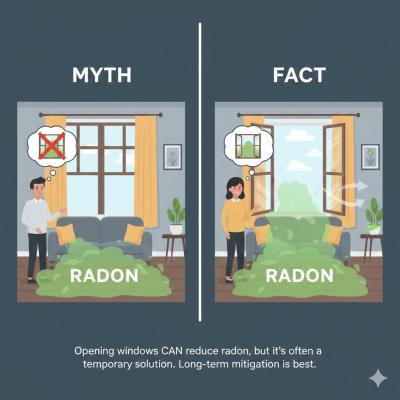
Myth or Fact: Can Opening Windows Reduce My Home's Radon Levels
-
Radon is one of those home hazards most people don’t think about—until they hear a neighbor mention a failed radon test or see a headline warning homeowners about lung cancer risks. Then the questions start rolling in. One of the most common (and understandable) questions is this: Can opening windows reduce my home’s radon levels?
At first glance, the idea makes sense. Fresh air comes in, stale air goes out, and surely harmful gases like radon get diluted, right? But as with many home health topics, the real answer is more nuanced.
In this in-depth guide, we’ll separate myth from fact, explain how radon actually behaves inside a home, explore whether opening windows helps at all, and—most importantly—what really works if you want to protect your household. Let’s dig in.
Understanding Radon: What It Is and Why It Matters
Before we tackle the window question, it’s important to understand what radon is and why it’s taken so seriously.
Radon is a naturally occurring radioactive gas produced by the breakdown of uranium in soil and rock. It has no color, smell, or taste, which makes it impossible to detect without specialized testing.
Why Radon Is Dangerous
Radon becomes a problem when it accumulates indoors. As you breathe it in, radioactive particles can damage lung tissue over time. According to major health authorities, radon is the second leading cause of lung cancer, after smoking, and the leading cause among non-smokers.
The risk isn’t hypothetical—it’s well-documented and measurable.
How Radon Gets Into Your Home
To understand whether opening windows helps, you need to know how radon enters a building in the first place.
Radon originates beneath your home, in the soil. From there, it moves upward and enters through:
-
Cracks in concrete slabs
-
Gaps around pipes and utility lines
-
Sump pumps and drains
-
Crawl spaces
-
Foundation joints
-
Porous building materials
Because most homes operate under slight negative pressure (especially in lower levels), radon is literally pulled inside from the ground below.
The Basics of Indoor Air Pressure and Radon Movement
Homes are not sealed boxes. Air is constantly moving in and out due to temperature differences, wind, and mechanical systems like furnaces and exhaust fans.
Here’s the key point:
Radon doesn’t just float around randomly—it follows pressure differentials.-
Warm air rises and escapes through the upper levels
-
This creates negative pressure in basements and crawl spaces
-
That negative pressure draws soil gases, including radon, into the home
This is why basements and ground-level rooms typically have the highest radon levels.
The Big Question: Can Opening Windows Reduce Radon Levels?
Now let’s get to the heart of the matter.
The Short Answer
Yes, opening windows can temporarily reduce radon levels—but it is not a reliable, safe, or long-term solution.
The Long Answer
Opening windows increases ventilation, which can dilute indoor radon concentrations. When fresh outdoor air mixes with indoor air, radon levels may drop—for a short time.
However, this reduction is often:
-
Temporary
-
Unpredictable
-
Highly dependent on the weather
-
Not consistent enough for health protection
Once the windows close—or weather conditions change—radon levels typically return to their previous state.
Why Opening Windows Is Not a Real Solution
Let’s break down the main reasons this approach falls short.
1. Radon Is Constantly Being Produced
Radon doesn’t stop forming just because your windows are open. Uranium in the soil continues to decay 24/7, which means radon is always being generated beneath your home.
Opening windows does nothing to stop the source of the problem.
2. Outdoor Air Conditions Change Constantly
Wind direction, temperature, humidity, and barometric pressure all influence airflow. On one day, open windows might lower radon slightly. On another day, they might actually increase radon levels by altering pressure in a way that pulls more soil gas inside.
3. You Can’t Leave Windows Open All the Time
In real life, keeping windows open year-round is unrealistic.
-
Cold winters
-
Hot summers
-
Rain, storms, and humidity
-
Security concerns
-
Noise and air pollution
Radon safety requires consistent control, not occasional ventilation.
4. Radon Enters Even When Windows Are Open
This is the most misunderstood point.
Even with windows open, negative pressure can still exist in lower parts of the home—especially basements. Radon can continue entering through the foundation while fresh air escapes elsewhere.
In some cases, opening windows upstairs can increase suction at the foundation level.
Myth vs. Fact: Clearing Up Common Radon Ventilation Beliefs
Let’s address some of the most common myths homeowners believe.
Myth 1: “If the house feels fresh, radon must be gone.”
Fact: Radon is odorless and invisible. Fresh-smelling air has nothing to do with radon concentration.
Myth 2: “Opening basement windows solves the problem.”
Fact: Basement windows may reduce radon briefly, but levels usually rebound once they’re closed.
Myth 3: “I only need ventilation during winter.”
Fact: Radon levels can fluctuate year-round and are often highest in winter—but summer radon can still be dangerous.
Myth 4: “Natural ventilation is safer than mechanical systems.”
Fact: Controlled mechanical mitigation is far more reliable and effective than passive airflow.
What Happens When You Rely on Windows Instead of Mitigation
Relying on window ventilation alone can create a false sense of security.
Here’s why that’s risky:
-
Radon test results may appear lower temporarily
-
Long-term exposure remains unaddressed
-
You may unknowingly exceed safe levels for months or years
-
Health risks accumulate silently over time
Radon-related lung cancer often develops after long-term exposure, not short spikes—making consistent control essential.
The Science-Backed Way to Reduce Radon Levels
If opening windows isn’t the answer, what is?
1. Professional Radon Mitigation Systems
The most effective solution is a radon mitigation system, typically involving sub-slab depressurization.
This system works by:
-
Installing a vent pipe through the foundation
-
Using a specialized fan to draw radon from beneath the home
-
Venting the gas safely above the roofline
Properly installed systems can reduce radon levels by up to 99%.
2. Sealing Foundation Cracks (Supportive, Not Standalone)
Sealing cracks and gaps helps reduce radon entry points—but it’s not enough by itself.
Think of sealing as a supporting measure, not a solution.
3. Controlled Mechanical Ventilation
In some cases, balanced ventilation systems (like HRVs or ERVs) can help manage radon, especially in well-sealed homes. These systems maintain consistent air exchange without relying on weather conditions.
Why DIY Ventilation Strategies Fall Short
Many homeowners try to “outsmart” radon with DIY fixes:
-
Fans in windows
-
Leaving doors open
-
Running bathroom exhaust fans
-
Installing box fans in basements
While these may slightly alter airflow, they lack precision and consistency. Worse, they can sometimes increase radon infiltration by changing pressure dynamics.
Radon mitigation isn’t about guessing—it’s about controlled engineering.
Testing Matters More Than Ventilation Guesswork
You can’t manage what you don’t measure.
Types of Radon Tests
-
Short-term tests: 2–7 days, good for initial screening
-
Long-term tests: 90 days or more, best for understanding true exposure
Opening windows during a test can skew results, which is why testing protocols usually require closed-house conditions.
This ensures the reading reflects your home’s typical radon level—not a temporary dip.
When Opening Windows Might Make Sense (Limited Use Cases)
To be fair, there are limited scenarios where opening windows can play a minor role.
Temporary Situations Only
-
Immediately after discovering high radon levels
-
While waiting for professional mitigation
-
During short-term air quality improvements (not radon control)
Even then, it should be viewed as a temporary comfort measure, not protection.
Radon and Energy Efficiency: A Hidden Conflict
Modern homes are built to be energy-efficient and airtight. While this saves money on heating and cooling, it can trap radon more effectively.
Ironically, opening windows to fight radon works against energy efficiency—and still doesn’t solve the problem.
Radon mitigation systems are designed to work with modern construction, not against it.
The Cost of Doing It Right vs. Doing Nothing
Many homeowners hesitate because they assume mitigation is expensive.
In reality:
-
Radon mitigation often costs less than major home repairs
-
It’s typically far cheaper than medical treatment
-
It can increase home value and buyer confidence
-
It provides peace of mind every day, not just when windows are open
When weighed against long-term health risks, proper mitigation is one of the most cost-effective safety upgrades available.
What Homebuyers and Sellers Need to Know
If you’re buying or selling a home, relying on open windows is especially risky.
-
Radon tests during real estate transactions follow strict protocols
-
Artificial ventilation can invalidate results
-
Buyers may request mitigation anyway
-
Transparency and proper fixes build trust and prevent delays
A professionally mitigated home is a strong selling point, not a liability.
Frequently Asked Questions About Radon and Windows
Can opening windows lower radon enough to pass a test?
Sometimes—but that result is unreliable and not representative of normal living conditions.
Do fans help more than windows?
Not significantly. Without controlling sub-slab pressure, fans are guesswork.
What if my radon level is just slightly high?
Even slightly elevated radon should be addressed with long-term solutions, not temporary fixes.
Final Verdict: Myth or Fact?
So, can opening windows reduce your home’s radon levels?
The Truth
Fact—temporarily. Myth—long-term.
Opening windows may dilute radon briefly, but it does not address the source, cannot be relied on consistently, and does not provide meaningful protection against long-term exposure.
If your goal is real safety—not just peace of mind—then professional testing and mitigation are the only proven answers.
Conclusion: Fresh Air Is Good, But It’s Not a Radon Solution
Opening windows is great for comfort, mood, and general air freshness—but when it comes to radon, it’s simply not enough. Radon is a persistent, invisible threat that requires deliberate, engineered solutions, not temporary airflow changes.
If you’re serious about protecting your home and the people in it, don’t rely on myths or half-measures. Test your home, understand your risk, and invest in a solution that works every hour of every day—even when the windows are closed. Trusted local experts like https://www.radonmitigationpdx.com/ can help you identify the problem and implement a lasting fix.
Because when it comes to radon, what you can’t see really can hurt you.
-